Archives For November 30, 1999

In Hong Kong we rightly complain about the state of the air we are forced to breathe and the government’s apparent lack of interest in addressing the pollution challenges – despite  HK$ half-trillion in fiscal reserves this year.

The moribund HK government seems incapable of taking action to protect its citizen’s health despite having the financial resources to do so. Clean Air Network is working hard and successfully to educate the public and stir the government to act, providing the tools and support to do so – hand-holding of sorts.

But perhaps part of the challenge is that in Beijing, from where I am working for three weeks, Hong Kong’s pollution pales by comparison – not that this city should set any standard!

Here, my eyes are a constant rimmed-red, a smog headache challenges concentration and my sinuses are in revolt. Here, the clouds are but a memory and weather is either cold or hot but never sunny, it seems, but there is only a steady grey. The near distance fades into a smog that anywhere else would be unbelievable.

This is the price of China’s progress, and, to be fair, of pulling an estimated 600 million people out of poverty over the past two decades by fulfilling our Western need to consume ever-more products. According to the ADB, over the past 20 years, China’s poverty rate fell from 85% to 15.9% – a huge challenge for any government and unmatched anywhere, anytime.

Still, what we hear more about in the West is the fantastic progress machine that is China, the well-oiled production centre for the world’s consumers.

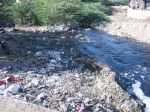
The flip side of that for China’s citizens is the polluted rivers, the smog-filled air, the cancer villages in evidence countrywide, the drained aquifers, the contaminated land. All of these will be the Beijing government’s newest challenges if it is to keep its population healthy and maintain social stability, which is the utmost goal.

Highly polluted areas near factories have shown increasing cases of cancer.  Southern China is replete with communities that recycle electronic waste and here people are exposed to toxic heavy metals such as cadmium and mercury.  The country’s myriad chemical factories produce carcinogens that enter the water and soil, also contaminating food grown on the land.

According to a recent Guardian article, in 2007, cancer was responsible for one in five deaths, and Chinese farmers are more likely to die of liver and stomach cancer than the world average.

Water supplies are polluted and aquifers significantly drained, something leading environmental activist Ma Jun warned about ten year’s ago in his book, China’s Water Crisis, which considered the local equivalent of Rachel Carson’s Silent Spring.

The Qinghai-Tibet plateau area suffers from environmental degradation that is threatening three major rivers: the Yangtze, Yellow and Mekong. Melting permafrost and glaciers in the surrounding mountains are also eroding the grasslands and wetlands, causing the ground to lose its capacity to absorb water, according to AFP.

Xin Yuanhong, a government scientist quoted by the news agency says that at the current rate, 30 percent of the region’s glaciers could disappear within 10 years.

Climate change is also affecting the 580 million people living in these river basins.  This crisis also affects food security; drought and drying up water sources are severely lowering crop yields in the area.

By all accounts, the government increasingly understands the severity of the challenge. Careful Chinese environmentalists are being allowed to speak out. Indeed, many seem to be encouraged by the government to highlight bad practice by companies breaking local laws by emitting pollutants into the water, air and ground. Information disclosure has taken leaps forward in recent months.

Ma Jun and his Institute of Public and Environmental Affairs over the past several years have divulged information in online databases of air and water violations by factories throughout China. He has created a groundbreaking “blacklist” of polluters. At last count, IPE databases listed more than 60,000 air and water violations.

To be removed from the list, companies must take corrective action and accept IPE-supervised environmental audits of their Chinese factories. Ma is also a champion of increasing access to environmental information, which he believes will bring public pressure on companies to operate more responsibly.

In Yunan Province, Yu Xiaogang, another courageous environmentalist I met with recently, is also using information disclosure, to gain bank data. He and his group, Green Watershed, along with a network of nine other NGOs, are compiling information on loans granted to development projects that are damaging to local populations.

The group recently published the environmental record of 14 Chinese banks, looking at their policies, regulations, investments and loan portfolios, noting which were connected with environmentally damaging projects.

Yu is also working with communities to help them open channels with local financial institutions to discuss social and environmental impact ahead of any loan being granted to a large development initiative.

That Beijing seems to be backing the sort of discussion underway in China is certainly encouraging. It seems Hong Kong should be setting standards in the environmental arena not lagging behind its severely challenged neighbour.

M’Lop Tapang is a remarkable organization. I’m reminded every time I visit. When I’m in Sihanoukville, I’m also reminded why I do my job. To be able to witness the incredible growth and impact of an organization like MT is truly a privilege. It gives me hope that we can help chip away at poverty and improve the lives of some of the world’s most challenged kids.

MT now works with 2,500 street and slum kids in the community, keeping them safe from abuse, getting drop-outs back into school, providing educational support to all, regular meals, healthcare, counseling and vocational training. There are night shelters for those without homes.

The committed staff works with the community, police and judiciary to make sure local authorities understand the challenges kids face working or living on the streets and educating them about pedophilia, which sadly is rife in Cambodia. As a result, the instances of kid abuse in the community have fallen and when pedophiles are caught they are much more likely to be kept in jail rather than being allowed to bribe their way to freedom.

As the M’Lop, or Umbrella tree, provides shade , M’Lop Tapang provides similar protection to Sihanoukville’s most vulnerable children.

I’m always struck by the surprising joy at MT, reflecting the resilience of the children, many of whom have suffered abuse, looked after an extremely sick or dying parent, or supported a whole family collecting cans or begging. There has not been much of what we would consider a childhood in these young lives – until M’Lop Tapang. The happiness, the determination to learn, is palpable walking around the centre, full of classrooms of attentive and enthusiastic kids. This is their place.

Most children participate in the arts and sports programs, which help foster the evident self-confidence in this lucky crew of kids. The arts of course also help them express themselves and learn new skills.

The arts program  includes amazing citywide carnivals and educational shows. This week, for example, MT kids, led by the amazingly dedicated Bob Passion and his Cambodian team, will be putting on a show for the Sihanoukville community on traffic safety. Other topics have been child safety, hygiene, recycling among many others.

MT kids also play team sports and the football team, well-attired in clean uniforms, travels to games. And believe me, they play to win!

The outreach program is large and amazing, with teams of social workers spending close time in the town’s poorest communities, taking education and healthcare to kids who can’t make it to MT’s day centre. They support children and their families through problems that, unresolved, hinder school attendance.

The baby program at the main M’Lop Tapang centre allows girls who otherwise might have to stay home to look after siblings, to bring them to MT, where they are cared for by a dedicated staff. The program also represents a safe place for very young children who have no other or inadequate care during the day at home.

Maggie Eno, a former British/Irish nurse, and Khmer friends began M’Lop Tapang in 2003 after watching local people and foreign tourists prey on children on the beach. What began as an initiative to feed six children under a large M’Lop tree and talk to them about safety quickly blossomed into  a wider program for about 250 by the time we met MT in 2006.

It has so inspiring to watch Maggie and her team, now led by Sarin, develop MT’s programs, broaden the services provided to street children and grow into the successful organization it has become.

In 2007 we built a new centre for MT and this year that was almost doubled in size to respond to growing need. The new wing houses more classrooms and an expanded clinic. Hong Kong medical Practice, Owens & Trodd has been great in providing on-going support and counsel to the MT medical team.

The MT staff now numbers 150 and are almost exclusively Khmer with the departure of MT’s American nurse, Hannah and also American Kate, who had helped with reporting, newsletters as well as other development work.

Francesco Caruso, who worked with Maggie near the beginning of MT has run the ADMCF children at risk programs from Hong Kong over the past few years. He helps raise funds for MT and others, as well as providing ongoing strategic support.

The rapid and solid growth of MT has involved so much dedication on the part of the hardworking staff as well as the  financial support from a diverse funding base that has allowed that to happen: DFID, several foreign embassies in Cambodia, Sovereign Art Foundation, Deutsche Bank Asia Foundation, the R.P. Haugland Foundation, Planet Wheeler, International Childcare Trust, to name just a few.

Visiting with Maggie in Sihanoukville we talked about the next phase of MT’s development being about building in greater sustainability where that is possible. Already, each of the vocational training programs are small businesses.

Working with Gustave from Phnom Penh-based Friends International, an excellent social enterprise, MT plans to develop over the next year a vocational training restaurant inspired by Friends’ own in the Capital. Friends, or Mith Samlanh, which is the local organization, is able to generate significant revenues from its excellent restaurants – Friends and Romdeng. Restaurant earnings help support the entire organization, which like MT was established to support street children.

It is great to see the two NGOs working in partnership, learning from each other.  They also have collaborated on the Child Safe program, which builds community knowledge around the need to protect.  MT implements that initiative in Sihanoukville.

MT has just expanded its own centre kitchen to allow space to begin training youth and develop food preparation skills. The next step, closer to the year’s end, will be a restaurant.

With a significant tourist population visiting the town’s many beautiful beaches and few good eating spots, the restaurant should be a success.

Other options are also being considered that, like the restaurant, might generate revenues to support MT programs and help lift the annual fundraising burden.

We are always keen to hear of any development, social enterprise models that have been tried successfully in similar contexts.

Babirusa

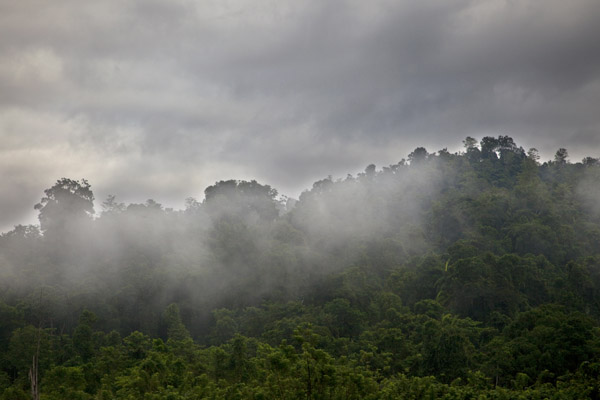
If I were a pessimist, this might be a moment of total despair over the future of high conservation value tropical forests in Indonesia.

The question we and others have struggled with has been: how to make the economics work for conservation? Logging is profitable business for large landowners; for communities, cutting trees can often represent the only source of income.

Most recently, hopes have rested on the carbon markets and REDD as a source of funding for both communities and landholders, paid for by companies wanting to offset their carbon emissions.

But Copenhagen was a disaster, leaving little hope for any global carbon framework anytime soon, while the weak U.S. Climate Change bill looks like it won’t be up for debate this year.  The carbon markets are in disarray.

Meanwhile, climate science itself is embroiled in controversy over seemingly not very much and last year’s financial markets meltdown has made investors innovation adverse.

When one of our carbon champions returned last week from a tour of the U.S. seemingly distraught over the state of the markets, we knew that was at least not an immediate answer to funding conservation, despite the abundance of REDD carbon projects dotting Southeast Asia!

But what are the solutions? What can possibly compete with the huge profits from logging virgin forests?

For two years, we have been working with Oxford-educated biologist, Dr. Lynn Clayton, who for the past two decades has courageously worked to protect the 62,000-hectares Nantu forest in Sulawesi, Indonesia.

Working with a small team, Dr. Clayton has done an excellent and recognized job keeping hunters from the region’s many endemic species such as the babirusa and anoa, which are described  in Alfred Russell Wallace’s 19th century tome, the Malay Archipelago, which chronicles the naturalist’s journeys in the unique region.

Under consideration has been an off-shore trust fund that would generate resources to support the conservation effort at Nantu and at the same time help promote alternative livelihoods for local communities, which are vital to any such effort.

But trust funds, which involve sizable up front chunks of cash, have fallen out of favour in the rush to carbon thus raising those sorts of resources (we estimate that US$5 million in a loan or donations would help secure Nantu) has proven difficult.

With carbon less certain than ever, the other alternative has been to generate business models around Nantu that potentially could generate funding for conservation as well as support local livelihoods.

Once again, however, the sticking point seems to be the feasibility studies and business planning that involve significant upfront costs with uncertain returns. What are interesting conservation finance models, perhaps from other regions, that are working?

We’ve been thinking a lot recently about how most people view philanthropy. We’ve been thinking that they view charitable giving  as something intensely private, something that comes from goodwill, from the heart, something that ought not to be confused with the rest of life, with numbers, with market norms.

We’ve been thinking that many people don’t really want to focus on the tough issues, on the “why?” for philanthropy: That 3 billion people, almost half of our world’s population, lives in poverty on less than US$2.50 a day, that 1 billion people don’t have access to clean drinking water, that 24,000 children die daily from poverty.

And then beyond poverty, the environmental challenges we face from increasing temperatures and rising sea levels to disappearing forests, from dramatic declines in fish populations to loss of terrestrial biodiversity.

We’ve been thinking that maybe we genuinely don’t have time in our busy lives to focus on what’s happening in the developing world or even the next neighborhood over, or maybe we just don’t want to see for lack of solution. What can we do, after all but write that check and feel that we have done our part?

It is true, that poverty, water shortages and the myriad environmental challenges don’t yet directly impact most of our own lives, which are full enough of each day’s stress.  So when it comes to philanthropy, to volunteering, we want to just enjoy the giving.

We prefer to contribute with emotion, with friends, regardless of the cause, without looking at numbers, statistics, without necessarily thinking about the end result. We want to give to what we know, what we assume will work, what we believe has always worked. We want the safe option, to be part of a community of people doing the right thing in the comfort of friends.

Understandable when we consider that the word philanthropy, loosely translates from its Greek roots as “love for humanity.”

But the reality is there is much more good work that could be done with the US$300 billion Americans give each year – an estimated 45 percent of world philanthropy. And the reality also is that to fix the damaged world our children will inherit, the poverty of our burgeoning world population, we must offer more than just “doing good” as an answer.

We must work against the sense of cross-purposes involved in thinking about the application of market norms to things social if we are to make the real and urgently needed change.  We must pay attention to the issues to which we are giving and use our philanthropy wisely to ensure we are indeed part of the solution.

There is precedent for doing more. We can look into philanthropy’s not so distant past to see that the Rockefellers and Vanderbilts were as innovative as it came in their charitable works. And of course it was Andrew Carnegie who so famously recognized the need for smart philanthropy, warning that most charitable acts go awry.

At essence, the philanthropy sector must draw on all resources at its disposal to build codes and gather information on and publicize successful or failed practices, we must learn to harness markets more effectively, to innovate around business models that can bring the sweeping changes we so badly need. There needs to be more tolerance of risk with charitable dollars.

Of course some of this is already happening with the growth of venture philanthropy, micro-credit and social entrepreneurship, with new models of investing for social impact, but there needs to be more and faster.

How can we promote transformation, not just in the professional philanthropic sector, but also among donors, which in turn will fuel change among implementing non-profits? How can we transform the attention paid to short-term results into a more patient investing in our future?

The sex trafficking and abuse of children is a growing problem regionally fueled by the $32 billion internet porn industry. As I’ve written earlier, UNICEF estimates that every year 1.2 million children are trafficked for sex, adding to the millions more already in captivity. 

Trafficking of children is highly lucrative and while profits are high, penalties are low in most Asian countries.  Internet porn isn’t the only outlet; growing sex tourism in Asia hasn’t helped. Child victims usually come from small villages, where awareness is lowest and poverty worst. 

Southeast Asian countries are source, transit and destination countries for child-sex traffickers and pedophiles. There is clear need for better education and awareness regarding the dangers children face. 

While, there are some excellent programs for Child Protection developed by local and international groups in Asia, for budgetary reasons these usually do not include smaller villages and often even slum communities where children are most at risk. 

It is here that awareness is lowest and families are often groomed to part with their children, supposedly to good jobs in the cities.

Parents, often faced with terrible decisions around paying medical and food bills, will separate from a child thinking they will be looked after by the kindly “auntie” or “uncle” who has promised the family financial support in return.

In rural and some slum communities, families, authorities, teachers and even small NGOs are neither aware of the problem nor able to prevent it.

Stairway Foundation  recognized years ago that in the Philippines, a favorite child-sex tourism destination, the 1.5 million street children and many millions more living in urban slums were easy targets.

In response, SF has developed three purpose-made animated films on incest, pedophilia and child-trafficking that have helped hundreds of organizations warn communities there.  But the message needs to spread widely in Asia and parents need to see alternatives.

Hong Kong-based ADM Capital Foundation is helping SF develop the animation materials and accompanying training into a regional strategy under the title, Break the Silence.  We believe that not only will BTS be complimentary to child protection programs already in place, but could be used in Western countries to educate young people about internet child pornography.

Ultimately, the goal is to build an effective awareness and protection program through local organizations that are able to offer a first line of support to children at risk of trafficking and abuse.

The program is designed to grow into a sustainable initiative driven by SF in co-operation with regional partners, sharing its approach toward reaching out to and effectively protecting marginalized children across Asia.

Have you seen any particularly innovative child protection work in Asia or beyond?  We are keen to learn of others working effectively in this arena.

French sailor Yves Marre first viewed Bangladesh’s myriad waterways from a plane and the adventurer decided the intriguing country below would be the location for his next exploration.

Yves perhaps would not have guessed that his adventure would consume him or that 25 years later he would be still living in Dhaka, married to a Bangladeshi Runa Khan and desperately struggling against time and lack of resources to document the country’s dying wooden boat building tradition.

What in 1994 then began as a development project involving transporting a 38-meter river barge from France to Bangladesh for use as a hospital boat in the remote northern chars, gave birth to Friendship, an excellent social enterprise I wrote about in my previous blog post. What I didn’t talk about was Friendship’s commitment to Bangladesh’s fascinating boat culture.

Last month, Friendship opened an exhibition of Bangladesh’s remarkable wooden boats at Dhaka’s National Museum as part of its cultural preservation programme. It is extraordinary that in a country so dependent on waterways, considered the world’s most susceptible to climate change, where boats are integral to trade and transport, that the art of boat building is dying quickly and with little fanfare.

Bangladesh has one of the oldest traditions in terms of naval carpentry, and it also has the largest fleets in the world. Here you will find the largest variety of boats

anywhere in the world, Marre says. It is all this that is being lost without adequate documentation or preservation of the country’s naval history, he says.

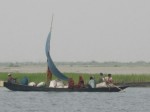
For many centuries, wooden boats with large earth-colored sails have plied Bangladesh’s hundreds of rivers and tributaries and they have become interwoven with the country’s culture. Yet over the past few decades, these beautiful vessels, many unique to particular regions of Bangladesh, have slowly been replaced by diesel-powered steel vessels, which are less expensive and more practical in terms of maintenance and navigation.

Yves and Runa have taken it upon themselves to draw attention to the disappearance and at the same time document and preserve the techniques and knowledge.

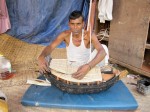
At his boatyard in Dhaka, Yves has built the more than 50 models on display at the museum in Dhaka of traditional Bangladeshi vessels. Building these, have been master craftsmen using only traditional techniques that are often unique to the country.

Here, Yves also has built or restored several full-size wooden boats, among them a beautiful 30-meter Malar vessel, one of the country’s largest hulls and now used to carry tourists along Bangladesh’s waterways. Some profits from the Friendship tourism company, Contic, built around the wooden boats, goes to support the social enterprise’s work.

Looking forward, Runa and Yves hope to establish a living museum that would preserve all types of traditional Bangladeshi boats in Dhaka and allow people to experience the craftsmanship involved.  To achieve this, they are searching for funding. Any suggestions of similar efforts elsewhere or possible sources of funding?

I recently spent some days in Bangladesh with Friendship and the excellent social enterprise’s executive director, Runa Khan. Friendship works with tens of thousands of the world’s most-vulnerable people who live in the northern Chars, remote and shifting sandbar islands that flood in winter and suffer drought in the summer.

Located about seven hours from Dhaka, these must be some of the most inhospitable habitats anywhere and consequently life expectancy for the forgotten people is only late 40s. In the rains, the islands shrink to slips of land with a few banana trees, with inhabitants and their livestock often forced to rooftops to survive the floods. In the heat of summer, the walks to the villages are often as long as three kilometers from the river through unforgiving sand.

An estimated 4 million nomadic people inhabit the 200 islands woven through the Brahmaputra river where land flattens toward the Bay of Bengal. The sand dwellers migrate from one island to another as much as 50 times in a lifetime, carrying with them their tin houses in the floods.

Climate change is clearly felt in Bangladesh’s distant northern and equally distant southern regions, where Friendship is almost alone among NGOs in working. Government reach here is also limited, Khan says. The people used to at least have certainty about the weather patterns but now the rains and droughts are harder to predict and more extreme, she says.

Friendship started its work more than ten years ago providing health care to the communities on a specially outfitted hospital barge, brought from France by Khan’s now husband, French sailor Yves Marre.  Now two hospital ships and an ambulance boat ply the Brahmauptra spending a month or two in each location, offering primary care at about US 10 cents for men, 5-7 cents for women and children as well as affordable basic surgery to the region’s weather-beaten inhabitants.

From medical care, Friendship has extended into education, (both for children and adults), livelihood and vocational support, working closely with communities to help them meet all their needs. With a staff of around 350, a complex schedule of foreign doctors and other medical professionals who fly in for specialized care, Friendship works with an estimated 40-50,000 people previously served mostly by microfinance providers, who often prayed on the extreme poverty.

Khan points out that although microfinance can work for people with at least some education and means of support, it is often not appropriate for the poorest, who will use any available funds simply to buy food for their families.    Many lenders, she says, show up on the islands with offers of cash, promising interest rates of only 10 percent annually. Without knowledge of basic arithmetic, the people take the money, spend it and then must meet the payments that often add up to rates closer to 50 percent, she says. And these are some of the better microcredit institutions. Money lenders charge as much as 120 percent.

“When we first start working with a char one of the first things we must do is unwind the microfinance loans,” Khan says. “People at that level of poverty need grants and other forms of support not loans.”

Khan says that the char people more than anything need, “hope for tomorrow” and Friendship offers education where there were no schools, healthcare where there were no doctors, livelihoods where people had none, community organization where people were disperse and disaster preparedness where there wasn’t any. A focus is on discussion, trading information, and building savings to prepare for years where the floods or droughts are life-threatening or force a relocation.

Friendship is also working to create a harmonious environment in the stark landscapes, building appropriate and local farming techniques for sand, bringing in solar where they can – with an emphasis on keeping people in their places of birth. Without Friendship, many people from these regions have swelled the slums of Dhaka in search of work.

Schools can be disassembled in three hours and moved to higher ground, girls are taught weaving and dying – skills that help them contribute to the family income and avoid an early marriage (12-14 was the norm before Friendship arrived). Community health workers are trained and sent to the villages, where they teach local people about nutrition, sanitation, about warning signs in a pregnancy and basic child health techniques. They also can dispense basic medicines.

“We listen to the communities, hear their needs and respond in ways that are appropriate,” says Khan of Friendship, which is surely one of the more innovative organizations I have seen.

Choosing how to give philanthropic dollars is usually a personal, often private, and hopefully rewarding enterprise many people like to keep close to home.

Those who spend much of their lives juggling returns on their financial investments and building wealth, often prefer to let other factors determine how to give to charity; emotion, for example, and perhaps friendship since frequently giving is something done in the comfort of circles or with friends.

The ever-bigger M'Lop Tapang centre for street children in Sihanoukville, Cambodia

But what is the significance of the donor community? Giving USA reports that every year, 40 million individual donors in the U.S. contribute $250 billion which represents more than 75% of total giving. That is a significant wad of cash that could be put to good use cleaning our environment and making our world a better place for marginalized communities. And that’s just in the U.S.

Obviously, there is no right approach to philanthropy and no absolute way to judge how effective a donation has been, despite that over the past two decades a whole industry has grown up around measuring social impact. But I think that once again we know more about what we don’t know rather than what we do.

Why do we need to think about how we give anyway? Isn’t that the point of giving – not to expect any return? I would say yes, true on one level, but not really. Why? Much has been written recently about the pitfalls of aid more generally. Two of the more vocal critics are New York University’s Bill Easterly and Dambisa Moyo whose book Dead Aid caused wide controversy.

The trouble is, without a concerted strategy or effective tools to guide us, many individual donors, grant-making bodies and foundations alike fall into the trap of providing aid that in the longer-term CAN be more damaging than helpful, despite our best intentions.

Because of issues around governance, particularly in a region like Asia where corruption is rampant, donors bypass governments, choosing instead to invest in a network of NGOs, which keeps these same NGOs flush with cash and lots of people employed.

If the NGO isn’t particularly thoughtful and doesn’t engage local government, this giving strategy also deprives the state of any stake in change and almost relieves them from the responsibility of improving the lives of marginalized citizens without a voice.

Another issue is that donors frequently prefer to contribute to contained NGO projects rather than to strengthening the organization simply because programmatic support fits with a particular donor funding agenda.

Although building new programs or expanding existing ones is important in terms of an NGO widening its impact, these often come at the expense of organizational support. It’s hard to see how an NGO can create a program, monitor it and measure its impact without sufficient organizational resources to do so.

Occasionally, or more than occasionally, an NGO has bent its needs to receive the targeted funding so there is little incentive or lack of adequate skills to really build.

And often that programmatic support is short term, given in periods of two to three years, after which the project is expected to be magically self-sustaining. Usually that is unrealistic and once funds are gone so is the program, leading to a real waste of resources.

So how do we make sure, as donors, that we are working as effectively as we can be with our own resources and not operating counterproductively, particularly in the developing world where issues are deep and broad?

This brings us right back to much talked about measuring impact. An excellent Wall Street Journal Article on Friday, Measuring the Bang of Every Donated Buck by Alice Hohler is a good discussion of the issues around this topic. http://bit.ly/d3Afil.

She points out that while many companies and NGOs have developed formulas for measuring the effectiveness of a donation, there still is no real magic box. She points to the tricky question of the unique qualities of nonprofits that are each fulfilling a social need in their own way.

There is little standardization in this field and little reason why one set of measures would fit all. Naturally, each organization then requires its own evaluation to assess its effectiveness and that is prohibitively expensive. It certainly isn’t scalable, which is another obsession among the donor community.

At the same time, any analysis of impact on the part of an NGO is only as good as the information gathered and few organizations have the resources, skill set or manpower to gather relevant data and then assess the real benefit.

An organization that  works to get children back into school will have a much easier time determining impact than for example a conservation group that works with communities to educate them about biodiversity and the value of preserving their forests.

But even in the first instance, we see there are many, many ways to count!

And then, how to compare organizations working in different spaces to determine which would use additional resources more effectively, providing the greatest benefit to a particular community?

We find that the best way around this question is to work in a holistic way with organizations, to help them set their own measurements with their particular children, to constantly work with them on developing initiatives and monitoring their effectiveness.

In that way, we can help them refine impact, reach more children or work more effectively in a particular conservation space. We shy away from the obvious numbers that are so often meaningless, preferring instead to let the work tell the story.

Any thoughts on interesting innovation in impact measurement seen working well?

Asia Water Project: China

Lisa Genasci —  February 25, 2010 — 1 Comment

The ADM Capital Foundation and Civic Exchange today launched in beta the Asia Water Project: China and AWP’s first piece of commissioned research, Water in China: Issues for Responsible Investors, authored by the independent research company Responsible Research, which is Singapore based.

Feels great to get the water portal birthed and visible, even if it’s only in testing phase ahead of the official launch on March 18 in Hong Kong. That will happen with IPE’s Ma Jun, who was the inspiration behind the water portal. It was a desire to translate Ma Jun’s data from the IPE website that names and shames water and air polluters in China, (see Jan. blog) that first inspired ADMCF to create AWP. Ma Jun, who wrote the first major book on China’s water crisis in 2000, uses only government emissions and penalties data on his site and in that way has been allowed to work relatively unimpeded in China.

ADMCF saw there was space to fill a lacuna in information relating to China’s water supply, management and pollution and at the same time better inform investors. We see there are both risks and opportunities in China’s growing crisis. Informed investors can help shape how companies respond to water challenges. Ina Pozon, who has built and manages AWP and ADMCF environment director, Sophie Le Clue,  have worked tirelessly in recent weeks with freelance writer, Pua Mench, to get the site in shape. Still work to do but today we are a big step closer!

Bloomberg sponsored today’s event, which featured Christine Loh of the CE, Lucy Carmody of RR and Guo Peiyuan of Beijing’s SynTao, an AWP partner and participant in the RR water research.

The research, found here: http://www.asiawaterproject.org, showed that China may be looking at trade-offs between access to clean water and economic growth. At the national level, China’s water shortages are thought responsible for direct economic losses of US$35 billion every year.  This is 2.5 times the average annual losses due to floods.

The report points out that sectors where China dominates globally, such as in steel, textile, paper and forest products, are heavily water intensive. Fluctuations in quantity and quality of water supply in these industries carry significant potential risks to earnings.

The new report draws on case studies from ten industries that have the most impact on water in China including agriculture, forest products, textiles and beverages. As water becomes increasingly material to investors in China, they will need to be more pro-active in looking at how listed companies are addressing supply issues.

While there is some understanding of water-related risks to companies and investors, “a key barrier is the lack of reliable, comprehensive information on water issues in China,” according to Ina. “The Asia Water Project has a unique role to play in fast-tracking this trend, through its commissioned research and its new web-based information portal.”

Earlier this month, the Chinese government released the findings of a pollution survey that show water pollution levels in 2007 were more than twice the official estimate, in part because previous reporting had failed to take agricultural contamination of water supplies into account.

Christine Loh reads this as good news that the Chinese government has done its homework and now understands that “the problem is as big as it is urgent.” She anticipates that “there will be more dialogue and debate in China this year” as government plans require reductions in wastewater pollution that are not easy.

The new investor report  also highlights some shocking statistics: 70 percent of China’s rivers and lakes are “significantly” contaminated, 50 percent of the country’s cities have polluted groundwater and over 30 percent of China is affected by acid rain.

Most of us agree that deforestation on the scale we have seen in recent decades is undesirable and unsustainable.

Our tropical forests are in dramatic decline, pumping tons of carbon into our atmosphere and causing changes in temperature and rainfall worldwide with potentially devastating consequences for our planet.

The problem remains, how to tackle this critical problem in developing regions, where corruption is endemic, how to pay the enormous costs of protecting forests and engaging the local communities that depend on them for their livelihoods.

Reversing global deforestation will require industrialized countries to invest billions annually in forest protection. It is worth remembering, however, that last year U.S. government put aside $700 billion for banks, insurers and automakers during the financial crisis as part of the Troubled Asset Relief Program.

By now, we know the story: Rainforests soak up huge amounts of planet-warming carbon dioxide. Deforestation releases retained CO2 released into the atmosphere.  Forest destruction contributes about 20 percent of mankind’s greenhouse gas emissions annually, according to the U.N. climate panel. Indeed, tropical deforestation is more damaging to our planet than the transport sector or factories, with one day of logging equivalent to the carbon footprint of eight million people flying to New York.

And why do we care? Our rainforests form a vital cooling band around the earth’s equator, generating a large part of our rainfall and acting as a thermostat.  We perhaps also aren’t aware that 50 per cent of life on earth exists in these humid forests, which cover less than 7 per cent of the planet’s surface. We are far from understanding the real consequences of losing the biodiversity we seem to take for granted.

Yet our governments, and indeed most of us, continue to act as though our tropical forests are expendable, that there is no impending climate crisis, biodiversity is a given, perhaps unimportant, and anticipate little, if any alteration in our lives of consumption and energy use.

Clearly, December’s global climate powwow in Copenhagen was the best reflection of this, with no real sense of urgency conveyed by governments gathered there.  Country delegations arrived by private jet, were ferried around town in gas-guzzling limos – not exactly the right tone for a crisis meeting on climate.

There had been hope to gain a legally binding international treaty committing nations to mandatory cuts in greenhouse gases but none was forthcoming, lost once more in the all too familiar regional bickering. And chances are slim of any agreement from the next round of U.N. climate talks in Cancun, Mexico, particularly following the resignation last week of Yvo de Boer, who has led the process for four years.

The pledges that de Boer did manage to eke out of Copenhagen will merely stabilize emissions by 2020. By most accounts, we need to achieve reductions  of at least 50 percent by midcentury – something that can’t be achieved without big cuts from the major emitters, which are the U.S., China, India and Brazil.

Part of the problem lies in ascertaining, at the international level, who should pay to conserve our forests. Developing nations want the right to develop unimpeded, while the United States wants to see significant emissions cuts from China and India that would be on par with its own and doesn’t want to be held accountable for cost.   Fundamentally, the U.S. has no effective national strategy of its own and thus is really not in a position to take the lead.

The assumption is that at some point, nations will get it together to achieve meaningful emissions reduction and carbon will become a real part of the solution. In the meantime, regional initiatives such as the U.S. Climate Change legislation currently stalled in the U.S. senate are evolving and could bring some movement in the carbon picture, generating resources for forestry conservation.

But will this be too little too late for our forests and what is the solution for them while we wait?

The bottom line is that in an attempt to protect what is left of our precious stores of tropical timber and the estimated 1.6 billion people who live amongst them, environmental groups have poured tens of millions of dollars into conservation over the last two decades without any real gains.

Global Witness co-founder Patrick Alley, said in a worth-quoting speech last year :

Virtually every intervention by the international donor community into the forests sector over the past few decades costing hundreds of millions of dollars has essentially been to patch up the holes in enforcement to stop the haemorrhaging of illegal timber and corruptly looted revenues. And these interventions have ranged from certification, chain of custody systems, governance, capacity building, law enforcement and there has been precious little success in that litany. And on top of this, we have the increasing threats of conversion to plantations and agricultural encroachment http://bit.ly/fiCvz

The U.N.’s Food and Agricultural Organization says about 13 million hectares, or an area the size of England, are still destroyed annually. In all, half the world’s tropical and temperate forests are now gone.

Author and environmental advocate, Gus Speth, ( http://bit.ly/bSBjOR) pointed out in a recent speech that species are disappearing at rates about 1,000 times faster than normal in a spasm of extinction not seen in 65 million years, since the dinosaurs disappeared.

Changes in our rainfall patterns have meant that over half the agricultural land in drier regions suffers from some degree of deterioration and desertification.

A key concern, if we are to reverse this trend, is either how to pay for conservation or, alternatively, how to make conservation pay; at a national level, how to justify the loss of revenue for developing countries that need the income.

The sad reality is that logging in the tropics generates enormous profit, but not for local communities and mostly not for governments in the form of taxes. Instead, much of the profit finds its way into corporate coffers and the offshore accounts of connected local individuals through corruption and illegal practices. The profit pressures on forests are huge from these interests. Biodiesel and palm oil have now also entered the equation, adding to the strains.

One initiative that tries to address the question of  how to generate profit for conservation and formalized at the Copenhagen talks was a U.N.-backed forest protection scheme called Reduced Emissions from Deforestation and Degradation or REDD.

This would include forests in the global carbon markets,  allowing polluters to earn tradable carbon credits by paying developing nations billions not to chop down their trees.  Local communities are supposed to earn a share of REDD credit sales to pay for better health, education and alternative livelihoods that persuade them to protect rather than cut down their forests.

But the revenue-sharing arrangements will differ for each country. Some NGOs worry that once again little support will filter down to the communities, with central and provincial governments demanding control of the money.

Another problem is that carbon measurement and accounting as part of any REDD design is complex and time-consuming, requiring laws to be enacted, officials to be trained and investors to be assured that the scheme won’t be undermined by corruption.

And finally, ensuring the forests aren’t simply cut down later, or that deforestation is displaced to another region or country, is another concern. REDD’s final technical design will have to address these issues.

Still, the well-regarded Eliasch Review (http://bit.ly/d99kM3) suggests that including REDD in a well-designed carbon trading system could provide the finance and incentives to reduce deforestation rates by up to 75 per cent in 2030

Still, in Indonesia, where the REDD discussion is quite advanced, there have been warnings that billions of dollars clearly are at risk from graft unless the country puts strong oversight mechanisms in place, according to a recent report released by CIFOR. (http://bit.ly/cfld28)

“Investors should be looking very carefully at the financial governance conditions in the countries where they will be investing their funds. Like Indonesia, many tropical forest countries have long track records of mismanaging public financial resources, particularly in the forestry sector,” said the report’s co-author, Christopher Barr.

Indonesia, which is one country in which ADMCF works on forestry issues, is the world’s third-largest area of tropical forest and the world’s third-largest emitter of carbon after the United States and China because of the massive destruction there of rainforest and peatlands.

Last year, Indonesia set up a legal framework for REDD. Several pilot projects are under way and the governments of Norway, Australia, Germany and the U.S. have promised millions of dollars in funding.

What we have seen everywhere forests are protected however, are the sad unintended consequences of the scramble for carbon: environmental groups that have been conserving forests are backing away from protecting them, fearing that as protected forest they won’t qualify under the REDD additionality clause.

It is uncertain whether already protected forests would qualify for REDD credits. This means that while we wait for REDD, for any sort of global or regional framework that will push forward the mechanisms that will allow large-scale protection, our forests are potentially more vulnerable than ever.

Fins at sea

I thought that since we were in the midst of Chinese New Year this might be the time to write about shark fin soup and its growing consumption in Asia. Perhaps not understood by many, is that this has dramatic consequences for our oceans, which are already depleted by overfishing.

Over the Lunar New Year, consumption explodes of the pretty tasteless soup, which is made by simmering the fins for up to eight hours with mushrooms, fine dried ham, other seafood in a base of clear chicken stock or water.

Traditionally served at Chinese weddings and other special-occasion banquets, shark fin has surged in popularity as China has become more prosperous, with more than 800,000 metric tons of fin consumed every year. That’s triple the quantity of 50 years ago.

Chinese believe that shark fin soup, which can cost as much as US$200 a bowl, promotes health and prosperity, reflecting the status of the hosts. And whereas in years gone by, families would gather to prepare a simple meal together, for an increasingly affluent population the Lunar New Year has become a time to splurge on expensive and not necessarily tasty gourmet cuisine at restaurants and hotels.

Turtles, abalone, shark fin and birds nest are top of the list of foods families feel compelled to order for their exotic qualities and expense, rather than necessarily for their taste.

The sad reality is, however, that 20 percent of shark species are now threatened, with  an estimated 200,000 killed daily – millions every month – many for their fins alone. Some sharks, like the hammerhead and the great white, have been reduced by upwards of 70 percent in the last 15 years, while others, like the silky white tip, have disappeared from some oceans entirely.

Part of the problem, is the shocking practice of finning, which has been banned by upwards of 60 countries since 2004. Since sharks are large creatures and the meat itself is not particularly valuable, to save space on their boats, fishermen often slice the fins off the live shark on the high seas, tossing the body back into the ocean, where the shark in effect drowns.

This practice is fueled by huge demand. A “set” of dorsal and pectoral fins can fetch as much as $100 for fishermen, and then $700 a kilogram in Hong Kong’s dried seafood stores, the hub of the world’s trade.

Beyond the huge waste in a world where many are hungry and the  cruelty of finning lies the reality that these wonderful and important creatures are disappearing from our oceans yet we can’t live without them.

Sharks and their direct predecessors have been swimming in the world’s oceans for well over 300 million years – long before dinosaurs walked the Earth. The fact that sharks have survived for so long without changing very much is a real tribute to the effectiveness of their anatomy.

According to the Oceanic Research Group, recent studies have shown that sharks are quite sophisticated. Most sharks have an incredible sense of smell. These sharks can detect one drop of blood dissolved in as much as one million gallons of water. Many sharks can detect the extremely minute electrical currents generated by the muscles of swimming fish. Some sharks can sense at a great distance the tiny pressure variations generated by an injured fish struggling to swim. Contrary to popular opinion, most sharks have excellent low light vision, thanks to a mirror located behind the retina. This mirror reflects light through the retina a second time. A shark may have many rows of teeth. When an old tooth breaks or becomes too dull, a new one rotates into place. Are these the marks of an unsophisticated creature?

Perhaps also not well known, is that sharks come in incredible varieties. The largest fish in the ocean is, in fact, the whale shark, reaching about 60 feet in length. The smallest known shark is only a few inches long when fully grown. While many sharks do have conspicuous teeth, many of these animals eat only small invertebrates. Other sharks have no teeth at all, feeding by straining plankton from the water much like the balleen whales do.

Often we hear that sharks are dangerous creatures, perhaps fueled by the film Jaws.  The fact is, you are much more likely to be hit by a car or even struck by lightning than you are to be attacked by a shark and there are on average only about four fatal shark attacks a year. In reality, sharks are no more dangerous to people than any other large predators like tigers or lions. Why do we label sharks killers, while we consider lions majestic, magnificent?

And perhaps most importantly, sharks are essential to the ocean ecosystem. Like most top predators, sharks feed on the sick and weak, thereby keeping the schools of fish healthy. Lions and tigers serve the same role in their ecosystems, removing the weaker animals from the herds, and keeping the gene pool strong.

In areas where sharks are significantly depleted, fishermen report serious declines in shellfish populations as other fish species feed on them undeterred.

Despite the threats sharks face, there is not enough action worldwide to protect these majestic creatures. Only three species of shark –  great white, basking and whale – are currently listed under Appendix II under the Convention on the International Trade of Endangered Species (CITES), meaning that trade in their parts is regulated.

Other species – including hammerheads, oceanic whitetip, dusky and sandbar sharks – desperately need the same protection. The U.S. is currently considering submitting proposals to add additional species to the list of sharks protected by CITES.

Among other action to conserve sharks, in Europe, the Shark Alliance – a coalition of NGOs – is working with governments there on regulation. In Hong Kong, Bloom Association (http://bit.ly/cFs4OQ) and WWF are working together to generate market, trade and cultural research that will inform a campaign targeting hotels, restaurants and consumers.

Joint and swift action is needed to protect sharks!

Hong Kong’s air quality is among the world’s worst for a city of comparable income levels. Here, the pollution we breathe negatively affects everyone. Not surprisingly, the poor are disproportionately impacted because they are unable to move out of some of the city’s most congested, polluted areas.

Since 1987, the World Health Organization has issued Air Quality Guidelines (”AQG”) to help governments protect public health. These AQGs are periodically revised to take into account the latest scientific research on the health impact of bad air. Currently, however, Hong Kong’s Air Quality Objectives (“AQO”) permit emissions that exceed the WHO’s latest AQGs by two to four times.  The AQOs, which are non-binding, were last updated in 1987. This year, the Government is reviewing the AQOs for the first time in more than 20 years.

Over the past two decades there has been insufficient action to mitigate air pollution in Hong Kong. We have often heard from government officials that there is little that can be done to change the quality of our air because much of the pollution drifts across the border from Guangdong.

Yet, research by the Hong Kong University of Science and Technology has shown that 53% of the time (192 days per year in 2006), most pollution affecting Hong Kong is from LOCAL SOURCES.

Some alarming facts about Hong Kong air pollution:

  • By WHO standards, Hong Kong’s air is only safely breathable 41 days a year.
  • Hong Kong air pollution causes three (avoidable) deaths a day, or more than 1,100 per year.
  • Hong Kong’s air is three times more polluted than New York’s and more than twice as polluted as London.
  • Although overall emissions tonnage has fallen in the past 15 years, roadside pollution has not improved. Because of its high concentration in close physical proximity to us, roadside pollution poses the biggest threat to human health.
  • 40% of roadside emissions come from buses.

It is therefore incorrect to believe that Hong Kong-based pollution abatement measures would make no or little difference in improving the local air quality.

We believe the Government could and should act immediately to improve the quality of air we breathe. Many cities worldwide have successfully taken action to clean their air and we believe that with tight AQOs and an appropriate plan of action could similarly clean up our air and improve the lives and health of residents

The Clean Air Network (www.hongkongcan.org) was formed to educate the public about the health impacts of air pollution and mobilize support for clean air in Hong Kong.

CAN is a NETWORK, bringing together and amplifying the voices of individuals, groups and organizations.

CAN’s overarching goal is to work with the Government to implement a stricter and more proactive air quality management regime.

Watch the CAN video here: http://bit.ly/86Md2r

.

Surging demand for water resources and extensive pollution have led to a well-documented water crisis in China.

Falling water tables, ground and river water pollution, water-borne disease, agricultural capacity constraints and an inability to introduce real pricing around water are focusing attention on this critical issue.

The government and industry can no longer be complacent about the availability of clean and plentiful water in China.

The facts speak for themselves:

  • China has 22 percent of the world’s population but only 7% of its freshwater
  • About 700 million Chinese drink water contaminated with waste. Consequently, water pollution sickens 190 million and causes an estimated 60,000 premature deaths annually
  • Two-thirds of Chinese cities face water shortages, which are particularly severe in Northern China, home to 45% of the population but 20% of water resources
  • Because of water mismanagement, illicit household and corporate discharges, inadequate water and wastewater treatment systems, water is often not useable
  • Estimates are that 90% of the aquifers of Chinese cities are polluted
  • More than 75% of river water in urban areas is unsuitable for drinking or fishing
  • 30% of river water throughout the country is unfit for agricultural or industrial use
  • China’s water productivity is low compared to its G20 peers, requiring about four times as much water withdrawn per US dollar produced as the average member

In reality, China is in the midst of a full-blown crisis. Left unaddressed, this could lead to dramatic consequences  in soaring health-care costs, lost productivity, unemployment and dramatic declines in agricultural production.

Yet  China’s water challenges are low on the agenda of both investors and the companies in which they invest, despite the material and potential reputational risk of choosing to ignore water consumption and usage.

Investors are choosing instead to continue to push resources into water-intensive  industries, build ever-more polluting power capacity, with little regard to the environmental consequences, the excessive water consumption and pollution of  waterways and aquifers.  Yes, China’s government has taken remarkable steps toward pulling its 1 billion citizens out of poverty – but at what future cost?

Responding to some of these questions, ADMCF and Hong Kong think tank, Civic Exchange along with a range of Hong Kong and Mainland China organizations have developed a web-based water portal and network. Targeting primarily investors and business, the portal will launch later this month under the working title, the Asia Water Project: China.

The aim is to help the corporate and investor communities make informed decisions around water. A community section will offer answers to more general China water-related queries.

In large part, this initiative grew out of ADMCF’s work with Chinese environmental activist, Ma Jun, and the Institute of Public and Environmental Affairs, ( http://en.ipe.org.cn/) and a recognized need to translate and communicate his air and water pollution maps to the investment community. Increasingly, investors are sensitive to the reputational risks around connections to polluting enterprises, while  many brands, for the same reasons, are showing concern about greening their supply chains and are working with Ma Jun and others to do just that.

Lack of data and research is consistently cited as a barrier to considering these risks strategically. The Asia Water Project portal responds to this information gap, bringing together a range of information sources in one space. In targeting investors, the goal of the Asia Water Project (AWP) is to consider risks and opportunities by divulging water-related information and commissioning independent and original water research. For companies, AWP is designed to flag best-practices in water management (supply, use and pollution) as well as to generate discussion and awareness around corporate water disclosure.

The past decade has shown how companies can effect change.  Multinationals have played a significant role in labour and climate change considerations taking root in China, encouraged largely by concerns around reputational risk and more recently legal concerns. With the right catalyst, we believe corporate action could play a similar role around water.

Despite obstacles such as endemic corruption and historically weak enforcement of pollution laws, the drivers of change look set to accelerate as the water crisis deepens. Water issues are increasingly clear on China’s policy agenda. A series of specific policy goals and priorities for water resource management feature in China’s 11th Five-Year Plan. The water pricing debate is likely to intensify as resources get tighter and inefficient water use, poor infrastructure and pollution continue.

Furthermore, with China projected to spend up to 1 trillion RMB by 2025 managing water scarcity issues, increasing attention is being paid to Chinese investment opportunities in water supply infrastructure, water treatment facilities and demand management technologies.

These and a myriad of other issues have implications for both the opportunities and risks facing investors and companies operating in China.

The excellent Stairway Foundation, based in Mindoro, Philippines (http://bit.ly/cNDOLa) has produced three animated films directed at an Asian audience that warn children and their families against the dangers of child sex trafficking.

From the comfort of our Western-world homes, trafficking in children for sex is unthinkable. Still, every year 1.2 million are sold for sex, adding to the millions more already in captivity. These children, with an average age of 14, feed into a burgeoning child sex market with a value estimated by UNICEF at US$32 billion. The growth in this horrific industry has been fueled by the boom in child pornography via the internet. Most people don’t understand, perhaps, that logging onto a child porn site in the U.S. or Europe has terrible ramifications for children in captivity.

In the Philippines, a favorite child sex tourism destination, the 1.5 million street children and many millions more living in urban slums are easy targets. For close to 20 years, Stairway Foundation, run by Danish Lars Jorgensen and American Monica Ray, has helped 700 organizations that work with children at-risk there. Using theatre and the three purpose-made animated films on incest, pedophilia and child-trafficking, SF has touched tens of thousands of Filipino children as well as many more around Asia. The films have been translated into eight Asian languages. They are accompanied by training materials and cartoon books that educate and warn, making the messages relevant locally. A traveling theatre production written in part by abused children carries a similar, difficult message.

The most recent film, Red Leaves Falling, is a 22-minute animated film that traces the story of two sisters, eight and 14, who are sold by their desperate mother to pay medical bills for a sick brother. The mother believes the children will be working as housemaids but instead they are trafficked to pornographers and a brothel. The story is desperately sad but reflects a reality of poverty and desperation faced by many in Asia and elsewhere. The message is clearly that we all need to speak against this unimaginable cruelty that exists because of the complicity inherent in silence.  http://bit.ly/bKrAv2

Despite the excellent materials and the need for these to be seen, most of the films and accompanying training materials have not had the breadth of distribution they deserve. There is urgent need to widen the net, particularly of the rural poor exposed to the materials SF produces. Cambodia and Thailand, for example, are other source, transit and destination countries for child sex traffickers and pedophiles  where there is clear need for education and awareness regarding the dangers children face.

There, excellent programs for Child Protection have been developed by local organizations such as M’Lop Tapang, Friends International (Child safe program) as well as some of the better known international groups. These organizations and others, however, do not have the breadth or funding to take awareness and training programs to smaller towns and villages where children are most at risk of abuse.  Consequently, in these communities, families, authorities, teachers and even small NGOs are neither aware of the problem nor able to prevent it.

At the same time, organizations like SF need to build sustainability into what they do. The films, valuable tools, are expensive to produce. ADM Capital Foundation is working with SF to develop a model that would allow for wider distribution and training and generate income, essentially selling to NGOs what has previously been offered as free product and services. The idea is for funders to pay for needed and experienced training. Any thoughts regarding this or similar models would be helpful!

Dr. Jodi Rowley, the remarkable amphibian researcher ADM Capital Foundation has supported over the past three years, has named a new species of Frog after ADM ‘s Robert Appleby. Leptolalax applebyi or, to us, Appleby’s Asian Litter Toad, is the new addition. Story here: http://bit.ly/crM0Kz.  Rob is thrilled but unsure about the resemblance!

The frog, which Dr. Rowley actually discovered in the central Vietnam highlands in 2007  was officially recognized in Zootaxa late last year. A frog naming party featuring the glamorous Dr. Rowley was held Thursday night in Hong Kong.

The brown frog, about 2 cms long, was found from its cricket-like call hiding under leaves on the forest floor. According to Dr. Rowley, finding new species of vertebrates is relatively rare these days.  One-third of all frog species globally are threatened and one-half are experiencing population declines, according to Jodi. There is a certain urgency to identifying and studying these remarkable creatures before it is too late.

Why do we particularly care about frogs, you might ask? Frogs are considered ‘canaries in the coal mine’, among the first indicators of environmental health, the first organisms to respond to change. Jodi has been mapping frog populations in the Indo-Burma corridor to set baselines. We need to know what’s there, what’s healthy and what’s not to track, for example, the effects of climate change on biodiversity.

Currently, the Indo-Burma region represents an area of high amphibian diversity, intense human pressure and relatively little information on the status of the species or their conservation. Besides mapping local amphibian populations, Jodi mentors and teaches at universities in Vietnam and Cambodia, working to help train local early-career conservationists.

Jodi has written in Zootaxa that she chose to honour Mr. Appleby, as “an investor in biodiversity conservation and scientific capacity building in Asia.” Beyond providing Jodi with key support (paying her harder-to-raise salary costs rather than providing the easier-to-raise trip and research funding), ADMCF has helped build the masters in conservation science program at the Royal University of Phnom Penh where Jodi has worked. We have also established a fund at Oxford University to send a graduate student to Cambodia each year to further their own research and at the same time to mentor and teach locally. Building the local conservation communities in places like Cambodia and Vietnam is crucial if we are to understand and protect  biodiversity.

Speaking of amphibians, Jodi’s photos of some frog species from the region are remarkable. I had no idea: One grows a collar of black spikes during mating season, while another grows hooks on its feet to disembowel competing males! Others are just plain beautiful. I guess it’s worth the leaches, the all-night frog hunting in jungle highlands for weeks on end, the Scrub Typhus that 29-year-old Jodi endures to find these creatures!

The Great Disconnect

Lisa Genasci —  January 24, 2010 — Leave a comment

Good salon conversation yesterday with Bill Barron, economist and author of The Great Disconnect, Martin Lees, secretary-general of the Club of Rome, Christine Loh of Hong Kong’s Civic Exchange and Adrian Nelson, who writes and consults on sustainability issues from Manila.

Organized by Civic Exchange, about 30 people packed a China Club room to hear Bill talk about his new book: http://bit.ly/5YwjRG. Martin and Adrian provide invaluable insight. The book essentially covers the disconnect between the reality scientists urgently are trying to convey about the state of our world, about how close we are to depleting our natural resources, to changing our climate and planet irreparably, yet the ever-growing levels of consumption and lack of action from most governments.

No governments are really looking to change our economic models, built around consumption-led growth and with 1 billion people in China and 1 billion people in India looking to consume as we have, that is simply unsustainable, given our severely depleted oceans, water resources, forests and fossil fuels.

Talked about was the U.S.’s missed opportunity to sign the Kyoto agreement and lead the world  in development of green technology, that China is seizing this moment to do just that. Is the seismic shift that will be needed to adequately address the enormous challenges we face an impossibility in a democracy was a question asked? While China seems to understand the danger of inaction and the opportunity around leading all things green, the U.S. struggles even to pass a watered-down climate change bill now stalled in the senate.

Also considered was just why the public is not getting the message that we need to radically change our way of thinking about our lives and the resources we consume, and that our governments need to respond with appropriate regulatory frameworks – both international and national – stimulate innovation and change.

The question was asked why, when given the opportunity to really lead the way, is the Hong Kong government unable to respond in any effective way to the challenges it faces, starting with the public health crisis caused by the deteriorating quality of our air. Research has shown that 53 percent of the time the pollution that affects us most is locally grown – and not from across the border as the government had claimed. Pollution in Hong Kong, which is three times that of New York and causes 1,100 avoidable deaths a year, is caused mostly by transportation: buses, dirty trucks and shipping. The two power plants, of course, also play a role.

Christine’s Civic Exchange (www.civic-exchange.org)  and more recently the Clean Air Network (www.hongkongcan.org) are both working hard to educate government about the public health effects of air pollution, its causes and solutions that would bring better quality of lives for us all. Hong Kong exists at an interesting intersection between China and the West and could easily play an essential role in stimulating change. Our government needs to seize this opportunity and lead.

Haiti’s Tragedy

Lisa Genasci —  January 24, 2010 — Leave a comment

There is with good reason an outpouring of sympathy and aid from the world to Haiti fueled by some of the most tragic images in years. Perhaps since the South East Asian tsunami on December 26 2004 that killed 230,000 people there hasn’t been such a rush to help others in need.

The  earthquake directly affected about a third of the nation’s population of 9 million, according to the Economist. Perhaps 2% of the population has been killed, and a larger share injured. Much, and maybe most, of the capital city was destroyed. Millions may be without homes. There is certainly need.

In response, US private donors have so far sent US$1.8 billion in cash and in-kind aid, according to the Indiana University Center on Philanthropy, with an AP poll showing that 30 percent of American households donated within two weeks of the disaster. There have been  parties in most communities to raise funds for Haiti. Schools have rallied in support of victims of the tragedy, organizing fundraisers and other events. Company employees have rallied to donate.

Much of the initial rush of funding has gone to support some of the aid organizations actively organizing relief operations in Haiti, including the Red Cross, Oxfam America, Partners in Health (which has been working in Haiti for two decades), Doctors without Borders and Unicef.

But it is important to remember that relief is only a small portion of what’s needed in Haiti – there will of course be a massive rebuilding effort once this initial phase is over. History shows that donations spike right after a disaster and then trail off as attentions are focused elsewhere.  At the same time, we must remember lessons from the Tsunami, which also stirred an outpouring of support for victims. Estimates are that despite the billions in well-meaning contributions, 30-40 percent of donations were tainted by graft or went astray.

Before the disaster, Haiti was the poorest country in the Western Hemisphere and among the poorest nations on earth, with barely functioning infrastructure nd already enormous challenges for the government.  Now it is outsiders who will have to direct and support much of that effort and it will be enormous.

So it is  important to consider longer-term support for Haiti once this first rush is over. the Besides the excellent Partners in health (http://www.pih.org), Acumen Fund’s Jacqueline Novogratz recommends donating to Architecture  for Humanity (http://www.architectureforhumanity.org/).

In an excellent blog in the Harvard Business Review targeting corporations gearing up to donate, Timothy Ogden (http://bit.ly/8N7EWh) turns to the adage: “don’t just do something, stand there.” He too points to patterns following other disasters:  donations spike in the immediate aftermath; A huge portion of the funds donated are spent on setting up disaster-relief operations that are no longer the primary need; A flood of cash and materials cause a logistics nightmare leading to waste and ineffectiveness, if not corruption; Six months later, reconstruction stalls because the world’s attention has moved elsewhere.

What can we do? Obviously there is need for short-term funds but Ogden and others suggest that when you donate, not earmarking funds for relief only as well as giving to organizations with solid local connections and long experience in-country such as Partners in Health. They are in Haiti for the long-run. Give cash rather than in-kind donations. In the aftermath of the tsunami, products and supplies that could have been sourced locally were flown into affected countries at great expense leading to waste and losing the opportunity to fuel local economies. Ogden also suggests considering giving in six to eight months when it is clear where rebuilding funds are needed.

A Beginning…..

Lisa Genasci —  January 10, 2010 — 1 Comment

It seems a moment, one of those zeitgeist moments when people start to question the status quo, they look around for what is wrong, what might work better and they seek change. What better time to start blogging about a field that desperately needs innovation, needs one of those zeitgeist moments, needs transformation: philanthropy.

Still, in this blog, just because I believe we are in a moment of transformation, I decided against using the tag philanthropy, but instead to focus on social business, which seems more fluid. I thought also that it would be worthwhile to start with a recurring and vital topic, why so little risk tolerance in the social sector at a moment when need is so great?

I recently completed an excellent week-long social entrepreneurship course at Insead in Singapore. The participants were fantastically interesting, the discussion great and the professors, from Insead’s Singapore and Fontainebleu campuses, top notch. The theme of risk aversion emerged as the bottleneck for all of us. We all identified a lack of patient risk capital in the social business sector.

Today, I found an excellent blog entry and discussion on the topic here:  http://socialentrepreneurship.change.org/blog/view/ philanthropic_capital_needs_to_take_more_risks. Nathaniel Whittemore also asks the question why the risk aversion?

I believe that in recent years many have fallen into the trap of trying to over-assess our impact, which of course can be measured in so many ways.  Many organizations feel compelled to bend programs to meet targets rather than respond to real need in new ways. As Whittemore points out, perhaps the overriding form of measurement is overhead costs, which may or may not mean anything depending on how a non-profit organization addresses a particular social problem. Inevitably, some forms of interaction with a community will be more costly than others – particularly those that involve needed and lengthy due diligence, consultation or interaction with the people the organization is hoping to serve. Presumably its exactly this constituency that can best inform or generate innovation?

The other factor limiting risk tolerance in the sector might be the potential reputational risk involved with funding a start-up initiative. This certainly springs from the real concern that a foundation must be careful with donor funds since presumably those have been hard-earned and shouldn’t be “wasted.” Part of the problem, here, though is the emphasis on maintaining the donor stream and the belief that publicized errors might scare away future support. The easy route then is to fund the tried and tested, the organizations that everyone knows – safety in numbers. If something goes wrong, it goes wrong for everyone “invested.” No one’s reputation is really at stake.

I am constantly surprised by the lack of risk and innovation in the wide field of philanthropy and indeed in the act of giving itself for most people. Even entrepreneurs or those who in their for-profit lives spend real time thinking about securing a financial return, often do not consider this when investing philanthropically. They prefer to give safely regardless of how those funds are used or to what end.