I’ve been thinking recently about Fiduciary responsibility and what that has come to mean over the past two decades of rapid growth.

I’ve been thinking about how and why the interpretation that has crept into investment culture over that period – simply to maximize rates of return  – has slowed an appreciation of investment that doesn’t cause social or environmental harm.

It goes without saying that this has also slowed investment that promotes social good as well as generating returns.

I’ve also been thinking that by itself  this narrow interpretation ignores both business risk and opportunity  – neither of which should be ignored considering the dictionary definition of fiduciary duty:  to act prudently.

Writing in a Capital Institute blog, Stephen Viederman, former president of the US-based Jessie Smith Noyes Foundation, argues that foundations should align program work with investment strategy – something that is all too rare.

“Foundation fiduciaries have an obligation to seek  ‘good’ and ‘competitive’ returns, not necessarily to maximize them,” he says.

Part of the problem has been the accompanying  “myth of financial underperformance from ‘social investing,’ a myth that still lies at the heart of the problem for finance committees who conveniently forget that two-thirds of traditional active managers underperform their benchmarks every year,” Viederman says.

“Yet the profit-maximizing argument–that you will underperform if you do sustainable investing–comes up time and time again in conversations and is never examined by the people who are making it.”

Indeed, most investors are not considering the business risk associated with investing, for example, in a power company, a textile operation or mining business in a region that is water scarce.

Most ignore the reputational risks associated with investing in factories or plants that are polluting, overly consumptive of resources, or engaged in bad labor practices.

“All investments are about the future, but most investment decisions are made on retrospective data, which as fund offerings make clear, are not predictors of future earnings,” says Viederman.

“We need to ask about …  ‘predictable surprises,’ which include climate change, the BP Gulf disaster and the financial bubble among others. …Any institutional investor who ignores them is in breach of their fiduciary duty. To be prudent, as in the prudent person, is in its original meaning, to be farseeing.”

The ADM Capital Foundation launched a web portal, China Water Risk, in October to provide investors and companies with information about water scarcity and pollution in China.

Part of the thesis behind the initiative is that better investment decisions produce better returns in the long run and these usually come with more information – and not the information investors traditionally have sought.

But, certainly, few could disagree that the regulatory environment is changing to reflect resource consumption and that water pricing in the near future will reflect scarcity.

Few could disagree that NGOs are increasingly sophisticated in exposing pollution incidents (see my blog posts on IPE’s Ma Jun and Apple, on Greenpeace’s Dirty Laundry and other reports) and that local protests in China are growing around pollution incidents.

Workers are no longer content to suffer exposure to hazardous chemicals silently, or work extraordinarily long hours without proper compensation.

All are, potentially, a drag on profits. Would it not then make sense for fiduciary duty to include analysis of  such risk?

Fully Risk-Adjusted Returns (FRR), as they might be called, should certainly not be lower as a result, indeed given the current and future challenges the world faces, they could even be enhanced by additional information.

For those who missed this, one company that is looking to consider the impact of production is PUMA, which earlier this year announced the results of an unprecedented environmental profit and loss screening.

This was a big step toward assigning economic value to resources consumed and to emissions. The value assigned was also a step toward determining the true cost of production of PUMA apparel and shoes.
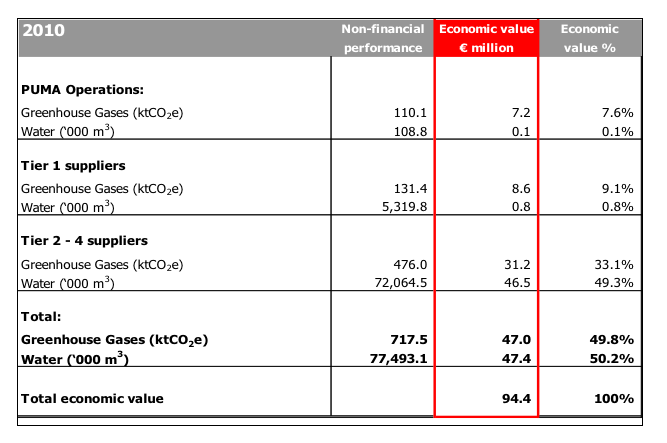
Results from PUMA's Environmental Profit and Loss Analysis

The analysis showed that raw material production accounted for the highest relative impact of Greenhouse Gas Emissions and water consumption within PUMA’s operations and supply chain.

According to PUMA’s report, the direct ecological impact of company operations translated to the equivalent of 7.2 million euros of the overall impact valuation. An additional 87.2 million euros was distributed along the four-tier supply chain.

Thus, the overall environmental impact of GHG and water consumption amounted to 94.4 million euros. That compares to a third-quarter net profit of 82 million euros.

“By putting a monetary value on the environmental impacts, PUMA is preparing for potential future legislation such as disclosure requirements,” the company said.

“By identifying the most significant environmental impacts, PUMA will develop solutions to address these issues, consequently minimizing both business risks and environmental effects.”

Finally, a new and important report from IESE Business school, “In Search of Gama, an Unconventional Perspective on Impact Investing,” steps into the discussion with questions such as:

  • By focusing exclusively on the creation of financial wealth for individuals are financial markets destroying value for society?
  • Is social responsibility a component of investment that is necessarily detrimental to financial return?
  • Should changes be made in the taxation and supervision of financial transactions to account for financial markets’ responsibility to society?

Clearly, business as usual is no longer smart business and change is imminent. Considering the impact of investments and reconsidering how we make investment decisions will be the way forward.

Let’s start  by redefining fiduciary responsibility, considering Fully Risked Returns. Clearly, returns may actually be enhanced either when viewed through the lens of an appropriate risk framework/weighting or in reality as a result of a superior business environment.

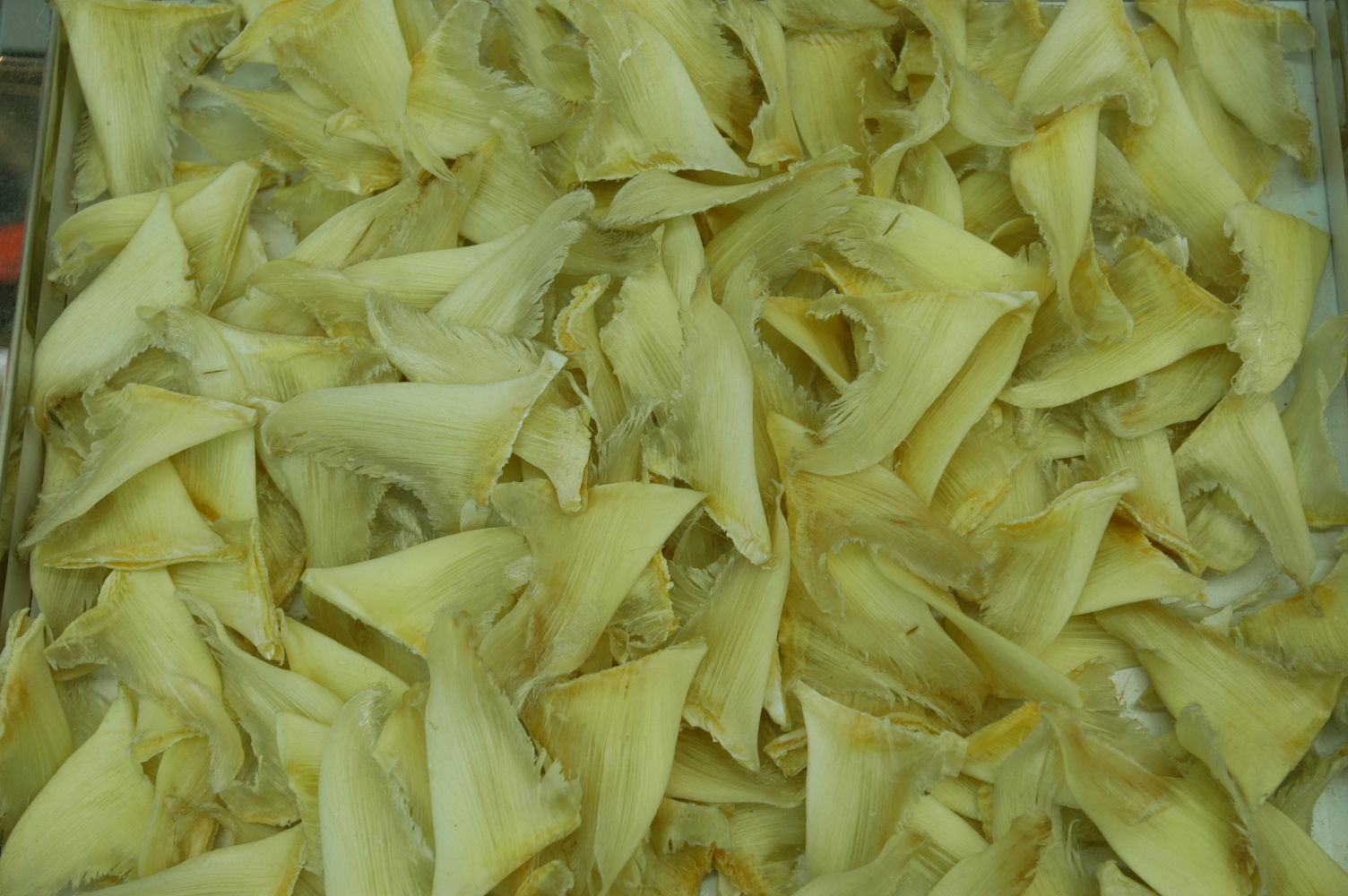
I’m still surprised when other conservation funders or even NGOs ask us why we work to protect sharks, indicating that this is a “single-species” issue among a platform of ADMCF initiatives that generally is much broader in tone.

I’m surprised when we have to point out that there are at least 440 species of sharks and that as apex predators they are critical to the health of our oceans. This is in no way a single-species issue and ultimately is integrally connected to the health of our commercial fisheries.

The initiatives against consumption of shark fin soup we support have much more to do with protecting our oceans, which are in significant decline. At least a third of shark species are threatened with extinction and some species have dropped in numbers by as much as 90 percent in recent years.

Sharks cannot easily recover from overfishing because they reproduce slowly, taking years to mature and producing few offspring. If we continue to fish shark at current rates, they simply won’t be part of our ocean life in the not too distant future, with potentially disastrous consequences for us all.

For 400 million years sharks (despite their negative image largely, thanks to Jaws) have helped to maintain and regulate the balance of our marine ecosystems. We don’t know exactly what our oceans would look like without sharks but we do know there would be significantly less biodiversity. Studies have shown that regions where there are more apex predators have more biodiversity, while areas without them show clear absences.

Still, every year perhaps as many as 73 millions sharks are caught – tens of millions of these for their fins alone. Although many sharks are landed and brought to shore with their fins attached, in order to save space on fishing boats, in many instances sharks are finned at sea and the body is discarded into the oceans, meaning the sharks drown. Any food value in the large body is wasted.

And Based on FAO statistics, global shark catches are likely to be underestimated by an astonishing three to four-fold.

Hong Kong plays an important role, with 50 percent of the shark fin trade passing through the city – much of it re-exported legally or illegally to China and the rest consumed locally, mostly at wedding or corporate banquets in soup.

Shark finning is an issue that ADMCF has been working with local conservation groups to highlight and advocate against in Hong Kong. Over the past five years we have supported  research, appeals to the hospitality industry and rest of the corporate sector  to stop serving and consuming shark fin soup.

With local organizations we have worked to build awareness among the general public about the biodiversity consequences of decimating our shark populations. Legislators have been approached to push the Hong Kong government to consider at least ceasing the consumption of shark fin soup at government banquets – something that in reality should be easy since the dish is expensive!

Ultimately, of course, we would all like the Hong Kong government to follow the world trend and consider a ban on the shark fin trade in Hong Kong.

Earlier this year, Bloom released important research on local attitudes to shark consumption that was publicized widely in local Chinese and international media. This research fundamentally changed the debate– from shark fin as an untouchable cultural issue to a global concern characterised by changing local attitudes.

And in an encouraging recent decision, the Hong Kong & Shanghai Hotels announced a ban on shark fin at all outlets including its Peninsula hotels as of Jan. 1. This was a major shift and key step in engaging Hong Kong’s leading hotels on a collective ban. Conservation International and Bloom Hong Kong are organizing a meeting of top Hong Kong hotel executives in January  2012 to discuss what initial steps they might take toward removing shark fin from restaurant menus.

Meanwhile, WWF and the HK Shark Foundation have managed to sign up more than 110 companies and industry groups in Hong Kong to a pledge not to serve shark fin soup or consume other shark products in the course of official business. Many others have privately committed to follow the ban but have asked not to named publicly.

Indeed, the number of shark conservation organisations in Hong Kong pressuring the government, the corporate community and the trade is at an all-time high. Social and mainstream media shows that public sentiment is shifting and the momentum against consumption of shark fin is continuing to build both here and abroad.

Increasingly people do understand the importance of sharks to our marine ecosystems. There is little doubt in most minds that protecting sharks is not a single-species issues.


Concern is growing globally about water resources and the potential for conflict in regions where they are scarce. But are investors and businesses in Asia adequately factoring water into risk assessments?

A recent Neilson study showed that worry about water shortages has overtaken global warming as the top issue, with 75 percent of respondents identifying this as something they worry most about. That represents an increase of 13 percent over the previous year.

And the concern is not without basis. Worldwide, almost 1 billion people lack access to safe drinking water while 70 percent of industrial waste in developing nations is dumped untreated into waterways, further limiting what is often already stretched supply.

Yet investors and leaders of industry may not be paying attention, considering water challenges simply an environmental problem rather than a fundamental business risk.

In China, the water landscape is particularly stark. We hear much about that country’s economic growth averaging 10 percent over the past 20 years, the massive and wholesale transformation of the economy at rapid pace, but not so much about the horrendous cost to the environment that already weighs heavily on GDP .

We hear much less about the dead and dying rivers, the over-pumped aquifers, the creeping desertification in previously agricultural areas, the thinned soil from over-use of pesticides, the power plants without adequate water to function, the massive and growing health care costs from poisonings and escalating cancer rates.

We hear very little about the growing numbers of protests nationwide linked to pollution incidents.

The government is clearly concerned.  The official response in China has been  a tightening regulatory environment, and a move toward real pricing of the precious resource, or the investment opportunities that an inevitable clean up will bring.

The recently approved, 12th five-year plan for the first time features climate change and energy, sets lower growth targets for the country and favors investment in industries that promote pollution clean up and cleaner processes generally.

Clearly, there are thus significant ramifications across a broad range of industries in China but are investors prepared? Are they staying ahead of the water risk curve, engaging in the due diligence and mitigation efforts needed to survive the inevitable and seismic shifts around water?

China Water Risk (CWR) is ADMCF’s redesigned follow-on from Asia Water Project, the pilot initiative launched 18 months ago to inform investors and companies of both risk and opportunities around water crisis in China.

This initiative, which launches later this month at www.chinawaterrisk.org, is designed to influence capital allocation to industries in China located in water-appropriate regions, with solid mitigation strategies built around water.

A brief portrait of water in China tells the back story.

Per capita global water resources are 6,280 cubic meters on average but people in China have less than 1/3 of that amount at 1.816 cubic meters.

So, the country with 20 percent of the world’s population has access to only 7 percent of global water resources, while an estimated 300 million people in the country are without access to safe drinking water.

And this is not just a problem for rural areas in China. In 2007, research showed that 60% of China’s cities faced water scarcity and 110 cities faced serious water shortages.

Despite already limited access to water in china, horrendous levels of pollutants are allowed to spill untreated into waterways and seep into aquifers from agriculture and industry in China.
Last year, the Ministry of Environmental Protection said serious pollution violations numbered on average 10 every month.
In all, an estimated 90 percent of urban groundwater is contaminated with pollutants and the quality of 40 percent of that is getting worse, according to China’s Ministry of Environmental Protection.

Pollution of groundwater follows from the low urban sewage treatment rate, which was only 73 percent in 2009, according to a recent article in China Business Times. Hundreds of new sewage treatment plants have been built nationwide in recent years and sit idle because of the high cost of operating them.

The Beijing-based Institute for Public & Environmental Affairs in its water pollution map (an inspiration for China Water Risk and a CWR partner) lists hundreds of violations by sewage plants.

According to the Ministry of Environmental Protection, 77 percent of 26 key lakes and reservoirs, 43 percent of 7 major river basins are considered unfit for human contact.  Meanwhile, 19 percent of monitored rivers and basins, 35 percent of lakes are reservoirs are believed unfit even for agricultural or industrial use.

The World Bank has warned of “catastrophic “ consequences for future generations if the government does not act to solve quickly the acute water shortage and pollution problems. The report urged new pricing, management and regulatory strategies.

In China, agriculture has been by far the largest consumer of water at 62 percent, and the largest polluter, with pesticides and fertilizers responsible for about half of contamination of waterways.

With water scarcity becoming more evident, waterways increasingly unfit for irrigation coupled with the fact that China holds only 7 percent of the world’s arable land, food security has by all accounts become of national concern.

Part of the problem around agriculture and food security in China has been that regions south of the Yangtze account for 33 percent of the country’s total farmland and 83 percent of the country’s water resources. North of the Yangtze, however, lies 67 percent of national farmland but only 17 percent of water resources

Exacerbating the problem, the country is the globally the largest consumer of pesticides and this has contributed heavily not only to aquifer and waterway pollution but to depletion of farmlands.

Meanwhile, as environmental and labor regulations tightened in the West pushing up prices at home, Foreign Direct Investment has flooded into China, fueling the factories, building the industry that is now feeding, clothing and housing the world.

Last year, FDI was estimated at $105.7 billion, surging 17.4 percent over the previous year. This is also helping build a huge middle class and affluent consumer market in China that is expected to almost triple to 400 million by 2020.

According to a September HSBC report, already next year China will replace Japan as the world’s largest consumer of luxury items – something unthinkable just a decade ago.

A joint report published in 2007 by the World Bank and the Chinese government estimated the combined health and non-health cost of outdoor air and water pollution at approximately $100 billion a year, or about 5.8% of China’s GDP.

Water pollution, meanwhile, worsens China’s severe water scarcity problems, with the overall cost of water shortages estimated at 1% of GDP.

The weight on economic growth is certainly of concern to Beijing, but equally concerning is the growing discontent in China related to pollution incidents and scarcity. In 2005, the last year for which government figures have been released, there were an estimated 50,000 protests nationwide related to pollution incidents.

This comes in response to significant growth of so-called cancer villages, or clusters of cancers invariably located near heavily polluting factories, fast-growing rates of urban cancers and outbreaks of illness or poisonings related to drinking polluted water.

Many of these protests have been centered around specific polluters and in several instances have forced factories or power plants to close. This then involves not just reputational risk but threatens serious economic losses for polluters.

There are also additional considerations around political risk.  Concern is that as climate change potentially exacerbates the country’s water shortages, the government sees the need to exert further control over domestic water resources with far-reaching consequences.

Of the 261 International rivers globally, 15 originate in China, including the Mekong, Ganges, Brahmaputra and Indus rivers. These international rivers span 16 nations and China has no formal agreements or treaties regarding the use of these rivers with any of its neighbors.

What is patently clear, is that no investor or business leader can step into China without carefully considering the water challenges facing each industry and then positioning to mitigate risk.  At the same time, don’t investors and business leaders want to position themselves to take advantage of potentially huge opportunity?

Today is World Ocean Day and marine conservation organization, Bloom, seized the opportunity to launch a playful new short film, “A Shark’s Fin.”

Half animation and half live-interview format, the film tries to lightheartedly illustrate the problem with eating shark fin soup and let people know just what that apparently simple act of consumption means for our oceans.

Made by Hong Kong writer director, Crystal Kwok, executive produced by Elaine Marden and featuring actor Michael Wong as well as two adorable Hong Kong primary school students, the film targets the younger audience, with the view that they will educate their parents.

Please share the film – the more views, the more education and hopefully fewer bowls of shark fin soup will be consumed.

Remember, 73 million sharks are killed each year, mostly to  satisfy demand for shark fin soup and 50 percent of the global trade passes through Hong Kong. We can take a stand: Honor our oceans by refusing to eat shark fin soup before we lose  the majestic predators to extinction.

I keep hearing about how expensive sustainable fashion inevitably is and that since we are used now to so-called fast fashion, it’s just not practical to think we will easily give up cheap apparel. But is greener fashion really more expensive? And how can we educate consumers  on this topic? These were two issues discussed during a panel I moderated last week as part of the Redress Forum in Hong Kong.

Among other featured topics during the day of presentations were, the business of sustainability, eco-labelling, best practice and inspiring the next generation.  The sense after a day of conversation was that there is still far to go in terms of really producing apparel that is truly sustainable for a mass audience and that the myriad eco-labels are often confusing to the buyer, designer AND the consumer.

In terms of waste, there is little that helps a consumer understand the recycled content of clothing and Hong Kong-based Redress announced it was introducing a new consumer-directed label that would help. A major fashion brand will be introducing this label shortly along with a new eco collection that includes a high percentage of recycled textiles – an exciting development here!

Although in the UK, for example, the sense among younger designers is that sustainable is the future, in Hong Kong, whether to wear fur even in summer seems more of a concern than sourcing green clothing, according to HK Tatler fashion editor, Arne Eggers. In the land where luxury is king and brands are everything, even the Tatler Green issue struggles for advertising, he said.

Still, also on my panel, “Educating and Engaging Consumers” was Tobias Fischer, regional CSR  manager Far East for H&M and he said that for his company sustainable equalled cost-saving. He became irritated every time sustainable fashion was described as more expensive, pointing out that sustainable involves saving costs on energy, water, chemicals, textiles etc.

“Current manufacturing is not factoring in the true cost of production,” said Filippo Ricci of UK’s From Somewhere and co-founder with Orsola de Castro of Estethica, established five years ago to showcase young designers committed to working eco sustainably as part of London Fashion Week.

And of course he’s right. In developing nations with few enforced regulations, the factory dying process causes untold damage to rivers and downstream populations when waste is simply pumped into waterways. Meanwhile, excessive chemicals used to grow cotton pollute the topsoil, groundwater and again damage the health of agricultural workers.

Heavy use of energy, often from coal, to produce apparel that satisfies our seemingly uninsatiable appetite for clothing means power plants must pump out waste emissions that pollute our air. Excessive consumption of water, particularly in already water-scarce regions (many of these in China) further limits supplies for future generations.

With consumption of clothing 60 percent higher over the past decade and the cost of clothing lower than ever, it just is not realistic to think that factories can continue to pump out product that doesn’t factor in any of the social or environmental costs of production. Already, with labor prices in China rising as living standards improve and regulation there tightens, inevitably costs  even of fast fashion will have to rise.

Meanwhile, however, many brands are simply taking their business elsewhere – looking to Vietnam, the Philippines and Indonesia among others to maintain the rock bottom prices we have come to expect, particularly from discount stores such as Target and TJ Max in the U.S.


Sunday's Freezemob in TST, Hong Kong

This blog was written by the director of ADMCF’s environment program, Sophie Le Clue

At the end of April, this blog highlighted research by HK Bloom Association into cultural attitudes to shark fin, which showed that Hong Kong is clearly ready for change when it comes to taking shark fin off food menus, despite the cultural sensitivity.  During May the research went on to receive global media coverage being reported from the New York Times to Louisiana’s Bayou Buzz in the US, to the Telegram in Australia and the Bangkok Post in Thailand (to name a few)– not to mention widespread coverage across blogs and websites.

In an even earlier blog we illustrated that momentum against sharkfin in HK was building , and what’s clear now is that these efforts are intensifying across the world.

Just last week:

  • Washington became the first State in the United States to prohibit the sale, purchase, trade, and preparation of shark fins.  Similar legislation which is generating much controversy also looks imminent in California and Oregon.
  • In Malaysia, the State Cabinet agreed with the Tourism, Culture and Environment Minister Datuk Masidi Manjun on the immediate need to include sharks in Sabah waters in the protected species list –it’s hoped this will be in force by year end.
  • Sabah’s top hotels are already preparing for this leading conservation move and last week were reported to already be taking shark fin off menus – Hong Kong please take note… particularly in light of the Ritz Carlton’s recent  announcement that its brand new Hong Kong hotel indeed intends to serve dish – suffice to say Hong Kong’s very active and effective shark conservation organisations (see previous blog – Hong Kong Campaign Against Shark Fin Soup gathers Strength ) are building momentum against this move by the Ritz.
  • There were rumblings that Canada is also gearing up to enter the discussion.  Brantford, a seemingly sleepy city in Ontario, will be debating this week on enacting a bylaw to prohibit the sale and consumption of all shark fin products (finning is already banned in Canada, but not the trade).
  • Back to the US and Chinese basket ball superstar Yao Ming flew to Shanghai to receive WildAid’s International Ambassador award, in recognition of his public stand against shark fin in China.

 All of these actions follow an unprecedented move in China, when in March, deputy to the National People’s Congress, Ding Liguo, proposed to ban the trade in shark fin – citing the unsustainability of the practice as well as its brutal nature. There are also indications that the public display of eating shark fin by China’s elites as a sign of wealth is beginning to irk those higher up.

And of course Hong Kongers also need a mention.  Just yesterday at precisely 12.45am an eerie silence pervaded the “Avenue of Stars’ (a popular tourist destination on the harbor front) as 350 odd people ‘froze’ for five minutes in protest against the shark fin trade and consumption.  This second ‘Freezemob’ organized by the Hong Kong Shark Foundation (HKSF) witnessed a near doubling of numbers from the first such event last year.

 As tourists meandered in and out of 350 frozen statues curiously eyeing a variety of shark paraphernalia, behind them hundreds of fishing trawlers silently sailed into the harbour in protest against Hong Kong’s landmark trawling ban announced last week – a curious juxtaposition.

Perhaps Hong Kong will get it right and lead the way after all.

Last week we spent some days plowing through one of the most important areas of tropical rainforest in Borneo,  central Kalimantan’s Sabangau, looking for Orangutans, gibbons, Langurs and other primates as well as learning about the ecology of the peatland habitat.

For two days we started at 4:30 am in the dark, wearing headlamps, looking for the elusive apes. Although boards (built on a former logging railway) run for some kilometers through the 45-hectare grid within which the researchers we were visiting spend most of their time, much of the forest walking was through deep peat swamp that occasionally reached mid-thigh! See the photo above of  intrepid ADM Capital partner Robert Appleby taking the measure of the peat’s depth!

The walk, more often a run, as over hours we chased to reach the spot where a gibbon grouping or orangutan had been spotted by the Dayak or foreign teams working the forest, was often a challenge but incredibly rewarding nonetheless.   Seeing the majestic creatures in the wild was truly breathtaking. The gibbon photo above was taken by the OuTrop crew.

We were visiting Oxford Primatologist Dr. Susan Cheyne who along with other senior wildlife conservationists leads a team of young researchers working out of an old logging camp situated in the designated Sabangau “Natural Laboratory” about an hour and  a half by road, boat and foot from Palangka Raya. The Laboratory sits within the 500,000 hectare Sabangau National Park, which actually is not yet officially a national park.

This year ADMCF has provided support to Dr. Cheyne through Oxford University’s Wildlife Conservation Unit (WildCRU), which also backs the conservation and research effort. Dr. Cheyne and her team monitor the distribution, population status, behaviour and ecology of the forest’s primates, carry out biodiversity and forestry research, and work with local partners to implement conservation solutions.

The team is sponsored in Indonesia by the Center for International Cooperation in Sustainable Management of Tropical Peatland (CIMTROP), which is responsible for conservation of the important 50,000 hectare peatland forest.

That involves mostly ranging and firefighting, although there is also an ongoing effort to dam the many canals built through the forest that were used to transport the illegal logs to the river and are now drying up the swamp. Estimates are that the peatland, as deep as  19 meters in some spots, is sinking with the lowered water table and this of course threatens the trees and amazing wildlife, which is just beginning to recover from logging.

Sabangau was turned over to conservation  in the late 1990s after Orangutan Tropical Peatland Project (OuTrop) research managed to document the incredible biodiversity of the forest and establish clear records of substantial populations of primates, clouded leopards and other endangered species.

Previously Sabangau was a logging concession, although luckily it was only selectively cut. More destructive though was the illegal logging that followed in the late 1990s – when the canals were cut through the swamp and more of the forest was chopped. Still, the research team has shown that surprisingly primates are returning to the peatland forest, which also has regenerated well.

Estimates are that the Sabangau previously hosted populations of about 14,000 orangutans and 40,000 gibbons and now numbers of each are at about half that amount, according to Dr. Cheyne.

Along with Dr. Cheyne, two other senior OuTrop primate researchers work from the Setia Alam camp: Simon Husson and Helen Morrogh-Bernard, who were among the first to identify the orangutan populations in  Sabangau and set up the camp with CIMTROP early last decade. OuTrop has been excellent at attracting paying volunteers and research interns to help survey the primates and biodiversity in the peat forest. Each individual seems to play a strong role in helping to build a portrait of the unique ecology of Sabangau. Certainly, more help is always needed for this important work, which is critical to inform conservation and indeed learn about the behavior of the animals.

To illustrate the importance, previous research establishing that the populations of apes lived in the forest was enough to persuade the Indonesian government that the area should be conservation forest. Now, new research is showing that adult male orangutans might need much larger range areas than previously believed, while gibbon family groupings perhaps also need more dispersal space in order to establish healthy populations.

The teams also believe that because food (flowers and fruits)  in the acidic peat swamps is not as plentiful as in regular tropical forest, apes may develop sophisticated mental maps of so-called “destination trees” and return to these in season to maximize their travel efficiency. The concern is that if these large feeding trees disappear so will the feeders.

Out of curiosity, we visited Block C of the Mega-Rice project. Which was indeed a sorry sight: So many kilometers of barren land subject to annual and devastating fires on the peatland where nothing now grows but scrub.

In the last days of the Soeharto era, Indonesia’s corrupt leader apparently handed logging concessions equal to about 1.4 million hectares to two sons and declared an ambitious plan to convert the Kalimantan peatland forest into rice padi, to be farmed by migrant workers from Java. The idea was to make Indonesia self-sustainable in rice production.

But the Project was a failure because acidic peatland was completely unsuitable for growing rice. Huge canals were built in the peat, ostensibly to control water-levels but instead drained the once-flooded swamps. Of course, the sons profited handsomely from the logging concessions, which many believe was the real motivation behind the Project.

In a major drought in 1997 the peat dried out entirely, caught fire and burned for months. This resulted in a smoke haze that covered much of south-east Asia and released huge amounts of carbon dioxide into the atmosphere. Burning forests in Indonesia are largely responsible for the country’s designation as the world’s third-largest emitter of greenhouse gases.

The former Mega-Rice area continues to burn annually during the dry season and is considered one of the world’s biggest environmental disasters. Luckily the Project was stopped before the Sabangau Forest itself was drained and cleared.

Photo by Alex Hofford 

Recent research has shown that the vast majority of people surveyed in Hong Kong would be happy without consuming shark fin soup at a wedding, even though it has become the status symbol of choice for couples getting married here.

This shows attitudes toward the dish may finally be changing. Much of the debate around the consumption of shark fin has centered around cultural attitudes, with some in the trade trying to define the discussion as an East versus West issue when really it is simply a matter of protecting our already depleted oceans.

The reality is that tens of millions of sharks are killed each year to satisfy our appetite for the tasteless delicacy and as a consequence their populations worldwide are at high risk of extinction. Sharks are integral to the health of our oceans.

By contrast, consumption of the soup began with the Song dynasty (960-1279) when the expense meant this was the privilege only of the wealthy and this continued to be the case until the 1970s. Then, new wealth in Asia made shark fin accessible to more people and its consumption became associated with status – an important feature of any wedding and significant business banquet.  At the same time, more destructive fishing practices designed to dramatically escalate the catch helped make expanded consumption of shark fin possible.

Clearly, this is now a lucrative trade estimated at US$1 billion, with prices still high for the fins, which are often removed from the shark at sea. Frequently, the shark body, considered of lesser value, is thrown back into the sea where the shark is left to drown without its fins. An estimated 50 percent of the trade passes through Hong Kong, which also is where a significant portion of the consumption also occurs.

So the Bloom survey forces us to reconsider the assumption that people in Hong Kong believe eating shark fin soup at a wedding is non-negotiable in a city that is traditionally more focused on status than sustainability. The survey showed that may be changing.

In reality, 70 percent of people surveyed said that they had consumed shark fin at least once in the past twelve months and 90 percent of these at a wedding banquet. Tradition rather than taste was the main reason people said they eat shark fin and 87 percent of the time it is consumed as part of a set menu rather than chosen as an a la carte offering. Of the people surveyed, 43 percent had thought about a replacement dish, indicating that perhaps they were thinking about the sustainability issues around consuming shark fin.

The Bloom survey was conducted by the University of Hong Kong Social Sciences Research Centre. Bloom, WWF and the Hong Kong Shark Foundation are working effectively in Hong Kong to build awareness around the environmental issues associated with shark fin products and decrease their consumption.


A Greener Apple: SCMP Op-Ed April 7, 2011

When Apple announces profits for the second fiscal quarter this month, analysts expect record figures amid a slew of new products. The previous quarter was already a record for Apple, which posted revenues of US$26 billion and profit of US$6 billion. The question we should ask, then, is: does a company with a solid reputation for being on top of its game have a responsibility to manufacture without excessive environmental and social cost?

The well-documented poisoning of workers and violation of environmental regulations at some of Apple’s key suppliers shows there is an obvious gap in environmental and socially responsible management throughout the company’s supply chain.

Over the past nine months, Chinese environmental organisations have pushed global and local IT brands to recognise social and environmental problems within their supply chains and resolve them. Among the 29 brands targeted, Apple was the only company to be evasive, if not completely unresponsive.

Recently, Apple admitted that 137 workers were poisoned but continues to place the blame with the supplier, Wintek.

Throughout their lifecycle, from material extraction to production, and from consumer use to disposal, electronic products have the potential to affect human health and the environment through the release of chemicals and energy consumption. Printed circuit boards and battery production, in particular, create heavy metal pollution.

Part of the problem, of course, lies with the consumer, whose demand for cheap goods means the purchased item doesn’t reflect the true cost of production – the toll on the environment,and on public and worker health.

Furthermore, information technology companies continue to produce goods that have obsolescence built in – meaning we consume endlessly, looking for the latest product. Who should bear those costs? In the case of poisoning and pollution incidents, the violating supplier has a responsibility, as does the government department where a lack of supervision may have caused the incident.

However, a company such as Apple cannot avoid its own responsibility either. Amid economic globalisation, Apple has not retained any of its own factories and even the production of parts as small as screws has been outsourced. That does not mean pollution and occupational injuries during the manufacturing of Apple products have disappeared.

We must remember that suppliers who violate environmental standards and ignore workers’ health do this to cut costs. Analysis of the distribution of profits in the supply chain for the iPhone 4 has shown that, for each iPhone 4 selling for US$600, Foxconn and other Chinese assembly companies receive only US$6.54. Apple’stakings for each iPhone 4, on the other hand, is up to US$360.

With power comes responsibility. Is it really fair for Apple to grab most of the profit yet shirk responsibility for environmental pollution and worker poisonings in its supply chain?

Apple claims that “we require that our suppliers provide safe working conditions, treat workers with dignity and respect, and use environmentally responsible manufacturing processes wherever Apple products are made”. But environmental protection groups have found that Apple has seriously violated its own promises. Yet, the company is deeply involved in supply chain management – from the choice of materials to the control of dust levels in the production process.

At present, China’s environmental-information disclosure is expanding, meaning that many companies’ environmentalviolation records can be acquired by the public. Brands have already started using this information to ensure suppliers are not in violation of local environmental laws.

Apple needs to change its opaque supply chain and social responsibility management system, and work to overcome problems in its supply chain

Ma Jun is director of Beijing’s Institute of Public & Environmental Affairs

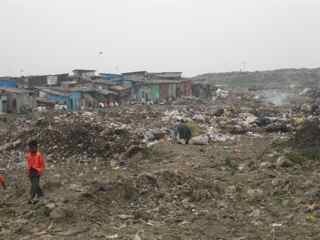
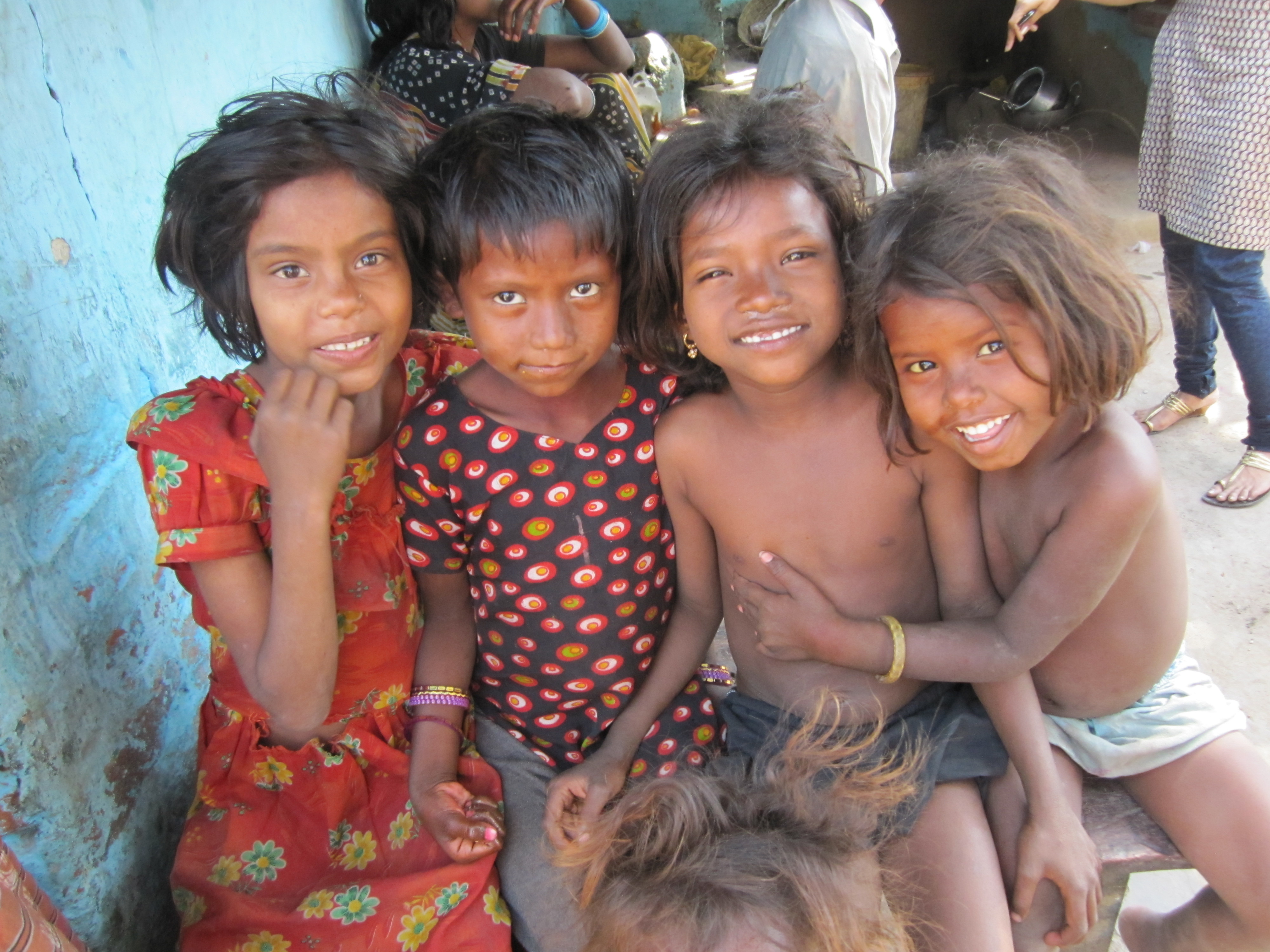
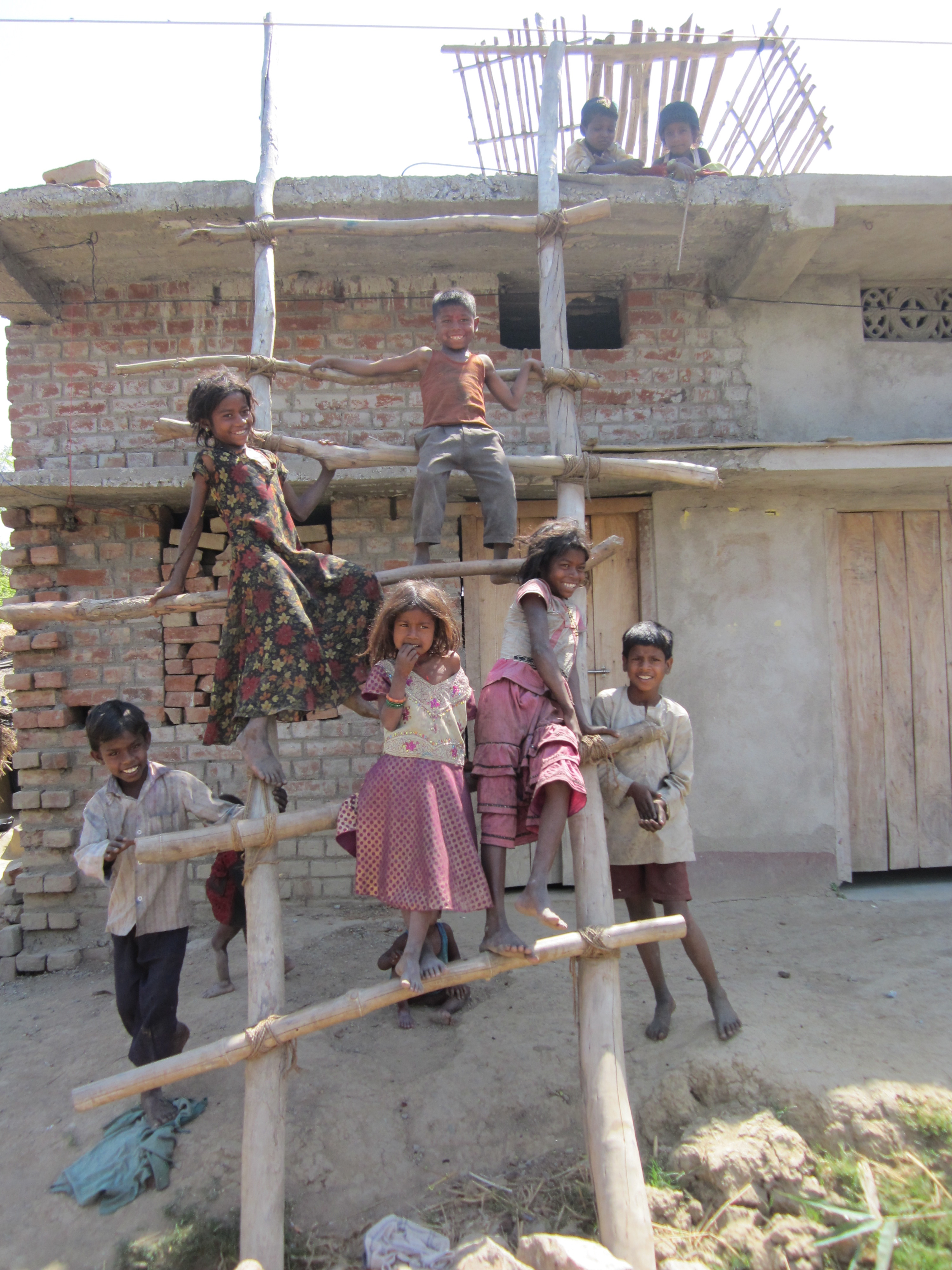
ADMCF recently spent time in Patna, in India’s Bihar state where we were looking at how we might work effectively with the Musahar community, which ranks at the bottom of the dalit or untouchable caste.

We found that there is apparently relatively little concrete information about or assistance given to the Musahar, whose name translates quite literally as the “rat-eaters.” Estimates of their numbers in Bihar and other states range from 2 million to as high as 5 million.

The Musahar fall so far down the well of the Indian caste system that by all accounts its people live in modern India much as they did 2,000 years ago. In an initiative that was perhaps telling about the regard in which the community is held, in 2008 the Indian government acted to help the Musahar by allowing the commercialization of rat meat.

A brief portrait of their situation gleaned from what is available online and through conversations in Bihar: In the villages around Patna in Bihar state, India, child marriage at 13 or 14 is still common, although illegal in India.

In the rural areas, Musahar are primarily bonded agricultural labourers, but often go without work for as much as eight months in a year.  Children work alongside their parents in the fields or as rag pickers, earning as little as 25 to 30 rupees daily.

The Musahar literacy rate is 3 percent, but falls below 1 percent for the women. Yet it is cast discrimination rather than parents that keep Musahari children away from schools. That said, the schools to which they have access apparently offer so little in the way of education that perception among the community is that schooling doesn’t offer them anything. And it is certainly true that even if they do manage an education certificate, discrimination means few manage to find jobs anyway.

By some estimates, as many as 85 percent of some villages of Musahars suffer from malnutrition and with access to health centres scant, diseases such as malaria and kala-azar, the most severe form of Leishmaniasis, are prevalent.

Besides eating rats, the Musahars are known for producing a good and cheap alcohol so not surprisingly alcoholism is rampant among the community, particularly the men.

Government development programs provide very little support to the Musahars. They are not recipients of housing schemes because generally they do not possess title deeds for their land. They are also the lowest number of recipients of loans from revolving funds within government schemes.  Thus the social support system bypasses them, as do private donations since so little is known about them.

The Dalit community in Bihar as a whole suffers frequent and often unpunished human rights violations. In the ten years before 2003, for example, 4243 cases of Dalit atrocities were registered in police stations, including 694 cases of murder, 1049 of rape, 1658 of severe injury and 842 cases of insult and abuse.

Into this picture walked Sudha Varghese 26 years ago, a nun who wanted to give voice to India’s dalits. The Musahars were the least advantaged of the dalits she could find and she moved into their community to truly understand their needs and way of thinking.

her organization, Nari Gunjan, was born to give voice to the Musahar women in particular. The organization now runs 72  primary education centres and a residential hostel/school for girls. Nari Gunjan promotes social, political, and economic empowerment for the women and girls. Beyond education, some of the centers provide vocational training and assist with micro-credit for Musahar women.

A decade ago, recognizing the need also to represent Musahar women in the courts, Sudha sent herself to law school and returned armed with a new skill set she has used to pursue the prosecution of ten rape cases that without her would have gone unpunished. In each case, she lead a column of Musahar women to the police stations to persuade officers to make the right arrest and in each case she has succeeded in putting the perpetrators behind bars, she says.

Known as the “bicycle nun” Sudha visits the various communities on her bicycle, and her fragile appearance belies a ferocious determination to provide Musahar children with education, self-esteem and purpose, its women with hope. For her courage, India’s national government recently awarded Sister Sudha the country’s highest civilian award, the Padmashri.

During a visit, the difference between children who attend her education centers and those who don’t was immediately apparent. Still, like any organization working in difficult circumstances that has been around for some time, achieving a constant flow of funding, even at the modest scale Nari Gunjan requires, is extremely hard. Some of the education centers have gone unfunded for 10 months although the teachers continue to work and the children appear.

Hong Kong vegetables, mostly imported from the mainland, contain high levels of lead and traces of other metals, including cadmium, according to research released last week by the Hong Kong Baptist University. This followed last month’s revelation by Chinese government scientists that 12 million tons of Chinese rice are contaminated with heavy metals.

The Baptist University tests were of 93 vegetables imported from the mainland and bought at local Hong Kong street markets or supermarkets, as well as of produce grown on Hong Kong farms, between September and December last year.

The most contaminated vegetable was apparently mainland-grown choy sum, which is also one of Hong Kong’s most consumed vegetables.

An article in the South China Morning Post on Friday showed that although the levels of lead in the study were 2.8 times higher than the global standard, they were acceptable under Hong Kong regulations. Traces of Cadmium also were found in some vegetables.

According to the SCMP, Hong Kong’s standards are shockingly 20 times less stringent than those of the World Health Organization, the European Union or Australia.

Author of the study, Professor Jonathan Wong Woon-Chung of Baptist University’s Hong Kong Organic Resource Centre told the Standard that ninety percent of vegetables in Hong Kong were imported from the mainland.

“The result demonstrates that lead pollution in mainland farm produce is serious,” he was quoted as saying.

In China, heavy metal pollution in crops comes mostly from contaminated irrigation water, pesticides or excessive application of chemical fertilizers and hormones as well as direct heavy metal contamination of the soil as a result of emissions from nearby factories.

Long-term consumption of vegetables polluted with heavy metals can contribute to cancers as well as damage the nervous system. Excess cadmium can also cause kidney stones, while excess lead can affect brain activity in children.

Wong pointed out in the SCMP article that leaf vegetables such as choy sum and spinach were more likely to absorb heavy metals. He suggested people alternate between these and fruit vegetables such as tomatoes and eggplants.

China has recognized that food security is a real issue for the country, following scandals over melamine in baby milk and many others that have caused unrest in many parts of China following discovery of contamination.

In February the SCMP reported that government scientists revealed millions of acres of Chinese agricultural land and 12 million tons of grain, or about 10 percent of the country’s rice crop, were contaminated by heavy metals. China’s southwestern provinces, where much of the country’s export manufacturing is concentrated, were particularly contaminated, according to the article.

Potential economic losses from the contaminated rice, which is enough to feed more than 40 million people, hit 20 billion yuan or HK$23.66 billion a year, the China Economic Weekly said, citing 2007 statistics from the Ministry of Land and Resources.

China is also confronting a serious and potentially costly health crisis, with clusters of “cancer villages” springing up downstream from factories and near mines.

At  the annual plenary session of China’s parliament this past week, soil contamination was a topic of urgent discussion.  In a news report on China.org Jia Kang, a CPPCC National Committee member and head of fiscal science at the Ministry of Finance, called for legislators to begin drafting a soil protection law.

Jia was quoted as saying that land pollution already threatens the sustainability of economic growth and social stability.

Meanwhile, the same site quoted Health Minister Chen Zhu as saying that comprehensive evaluations of health risks from soil pollution are underway. Environment Minister Zhou Shengxian in recent months has said he will work to curb soil pollution during the period of the current, or 12th, Five-Year Plan – a framework for China’s economic development over the period.

The most recent plan, introduced at the parliamentary session this past week, calls for China to step away from exclusive focus on rapid economic growth to a more balanced development model that includes more benefit sharing and recognizes the environmental challenges the country faces.

The annual parliamentary gathering generally sets the country’s political tone and government priorities.

Let’s hope that food security stays at the forefront of China’s agenda and that we see action from officials both on the mainland and in Hong Kong to protect public health.

Greenpeace photo of worker and wastewater textile discharge


That trendy shirt or pair of jeans, the underwear we buy these days mostly comes with a “Made in China” label.  When choosing clothing presumably we think first about style and second about price. Can we afford the style and quality? We rarely think about the environmental or social cost of the item, the “true” cost of manufacturing a coveted dress.

We don’t know about the dye that washes into the local rivers where the item is made, the chemicals spreading downstream from manufacturing plants, contaminating water supplies and making local people sick. We want, we can afford, we buy. But should we without knowing how our clothes are made and the damage they do in the process?

Last year, according to the American Apparel and Footwear Association, Americans spent about $340 billion on clothing and shoes, accounting for 75 percent of the global market. Of that, 99 percent of shoes and 98 percent of clothing was made abroad, where environmental and social laws are less stringent and enforcement of those that do exist is significantly looser.

The trouble is, many of the clothes we wear, particularly the cheapest, are highly polluting to produce at the low cost-point. According to the World Bank, 17 to 20 percent of industrial water pollution comes from textile dyeing and treatment, and there are at least 72 toxic chemicals in our water that originate solely from textile dyeing. Of these, 30 cannot be removed.

That’s a real problem for the textile industry: In China, Polluted water causes 75 percent of diseases and over 100,000 deaths annually, the World Health organization has said. Meanwhile, cancer rates among villagers who live along polluted waterways are much higher than the national average.

Estimates are that 70 percent of lakes and rivers in China are polluted, as well as 90 percent of the groundwater. In all, an estimated 320 million Chinese do not have access to clean drinking water – more than the entire population of the United States.

It used to be that clothing was made close to home, so we knew when a textile mill or garment manufacturer was polluting the local water or air and U.S. mill towns experienced some of the same problems China now faces, with local rivers often fetid and colored by dye. With greater awareness of the hazards, then years of battling, government regulatory authorities set tougher environmental and labor standards to make sure production wasn’t exploitative or damaging to our air and water. Manufacturers were forced to comply, installing capture equipment on smokestacks and treating any wastewater before pumping it into rivers.

But that made clothing more expensive to produce and then with the opening of China in the mid-1970s and the growing availability in the 1980s of cheap labor along with manufacturing capability, most of the production process gradually shifted there. Eventually, environmental and social laws were put in place in China too but often local enforcement is limited and corruption rampant.

That has meant many factories and textile mills have been able pollute at will. When they have been fined for violations, the fines are often insignificant relative to profit. That, and the fact that an abundant migrant labor force comprised of some of the hundreds of millions who previously lived below the poverty line and were willing to work for cheap, meant clothing could be produced at prices that didn’t factor in either the real cost of labor or the environmental damage.

Those costs were left for future generations to cover in health care, clean-up and other forms of support.

The result is that we are all now hooked on the irrationally cheap. Prices on fabric and clothing imported to the U.S. have fallen 25% since 1995, partly due to the downward pricing pressure brought by discount retail chains, according to an article in the Wall Street Journal.

Still, in China, the future is now. While migrant workers, now with a better standard of living, want fair wages and benefits such as health insurance, the Chinese government recognizes that the holy grail of economic growth at the 10 percent plus levels seen over the past two decades is unsustainable if the rampant environmental degradation continues apace.

Unrest has been growing across the country, particularly around perceived labor and environmental violations, with tens of thousands of mostly small protests annually, many of them unreported.

Besides the cost of cleaning up contaminated water, land and air, pollution will cost China billions in additional health care, lost productivity and early mortality, dragging down growth, the government recognizes.  The World Bank in a 2007 report estimated China’s environmental costs at around $100 billion a year, or about 5.8 percent of GDP, including the impact on mortality.

So any way you look at it, those clothes we like to buy in abundance, and have been taught in recent years to purchase and throw away without thought because prices are so cheap and styles constantly new, are a real problem for the environment, for workers who make them and ultimately for China’s economy.

In a report released in December, Greenpeace recounted time spent in two textile industry towns in Guangdong province:  Xintang, the “Jeans Capital of the World,” and Gurao, a manufacturing town 80% of whose economy is devoted to bras, underwear, and other clothing articles.

Greenpeace testing found five heavy metals (cadmium, chromium, mercury, lead, and copper) in 17 out of 21 water and sediment samples taken from throughout Xintang and Gurao. In one sample, cadmium exceeded China’s national limits by 128 times.

Xintang, known as the “Jeans Capital of the World”, produces over 260 million pairs of jeans annually, equivalent to 60% of China’s total denim production, and 40% of the jeans sold in the United States each year.

Gurao, “the capital of sexy,”  in 2009 produced 200 million bras, or enough for every third woman in China to have one. But this prosperity has come at the cost of the degradation of the local river, the Xiao Xi.

Villagers told Greenpeace that the dirty, fetid river is no longer fit for drinking or laundry. Fish no longer live in the river and people living nearby complain that they must endure the stench from the wastewater. When the river overflows, their yards and homes are flooded by wastewater.

Unfortunately, Gurao and Xintang are not unique, representing just 2 out of 133 textile manufacturing cluster towns where there exists unregulated or at least tolerated hazardous chemical use and release – all in the name of economic growth and jobs.

True, the rise of China over the past few decades has been startling, and the achievements not to be forgotten. In no other time in history has one government accomplished a similar feat: Pulling some 300 million people out of poverty. The questions remain, however, around the price of that transformation and how the government will choose to address this looking forward.

Indeed the 12th five-year plan, unveiled in March, includes provisions for reform that involve working to rebalance China’s Economy and improve livelihoods.  The government is keen to shift the growth model from export and investment driven to domestic consumption drive, and will focus on the quality of economic growth, not just the growth rate itself, perhaps reducing GDP targets to around 7 percent. There will be additional investment in alternative energies and a push toward promoting less-polluting industries, with a shift away from more polluting producers.

As wages rise in China, however, this is a trend that is already underway, with some of the dirtiest factories moving to Bangladesh, Pakistan and Vietnam, where regulations are even lighter and costs less. Once again, rather than cleaning the supply chain and charging higher prices to reflect cleanup costs and higher wages, some brands are just looking further south.

Luckily, this is not universally the case. There are retail brands that are looking to improve their own supply chains and influence the industry more broadly.

In March a coalition of retail companies, apparel and shoe manufacturers, fashion houses, non-profits, and the U.S. Environmental Protection Agency launched a new organization that seeks to reduce the environmental and social impacts of the clothing industry worldwide.

The Sustainable Apparel Coalition (SAC), which includes Wal-Mart, Hanes, J.C. Penney, Nike, Gap Inc, H&M, Levi Strauss, Marks & Spencer, and Patagonia, among others, will help to develop improved sustainability strategies and tools to measure and evaluate sustainability performance. The group of thirty organizations began working on this informally last year.

The group announced it was developing a database of the environmental effects of every manufacturer, component and process in apparel production, with the aim of using the gathered information to give the garments a sustainability store.

Part of the problem for the apparel industry is the complexity of the supply chain. There are many bits and bobs that go into producing our clothes and each piece may be produced in a different factory and then assembled in yet another. That means accounting for the environmental impact of any one item of clothing, tracing the zippers, the buttons, the natural fabric, the dyed fabric, is quite a feat.

Still, for the new coalition, tracing the various parts that make up one jacket or pair of trousers is the goal, along with conveying that information to the consumer. The idea is that eventually there is a label that allows shoppers to see how well their coveted item of clothing is produced and learn about its impact on both the planet and people.

And as consumers we all have a responsibility to think about how much and how we consume. Are our expectations around price and how long we use an item of clothing unrealistic?

The following blog post was written by Sophie Le Clue, director of ADMCF’s environment program:

Two weeks ago I attended Seaweb’s annual seafood summit in Vancouver. Aptly named ‘Responsibility without Borders’, it was attended by more than 700 industry representatives, NGOs and academics, from 30 countries.

These constituents gathered to discuss the different aspects and perspectives of the world’s fisheries.   In a previous blog (Catch it if you Can) I focused on the worrying situation facing our oceans as a result of intense and industrialised overfishing. 

A fairly bleak picture was painted, with huge environmental impacts and fisheries’ collapse imminent if we carry on business as usual. Not to mention the more immediate demise of certain fish species such as sharks, blue fin tuna, orange roughy and chilean sea bass.

However, with both a heavy industry and NGO presence, the summit showcased the progress that is being made in fisheries management, including improved traceability, the reported recovery of some stocks and on a slightly alternative note, the sustainability of eating seafood when compared to livestock – more on that later.

Ray Hillborn pointed out that not all capture fisheries are unsustainable – and that fish stocks in aggregate are stable rather than declining, based on data from N America, Europe, Australia and New Zealand.

Partnerships with NGOs and constructive engagement appeared to be a driving force behind the sustainable seafood ‘movement’ and the improvements that are emerging.

There was however a notable gap – which as you may have guessed, is the implication of seafood production, consumption and fisheries management in Asia and in particular, China.

A question raised at the summit hit the nail on the head, :– how can you keep growing sustainable seafood production/consumption without engaging the world’s largest seafood producer and market – the answer posed was simply – you can’t.

According to FAO, China is by far the largest fish-producing country, with production at 47.5 million tonnes in 2008.  This represents 17% of the world’s capture fisheries and 62% of world aquaculture production of fish, an impressive figure considering that aquaculture represents 46% of the total fish food supply globally.

Already the world’s largest seafood market, China is touted to become the world’s largest seafood importer by the end of the decade.

Annual per capita fish consumption globally is on the rise – 12.6kg/capita in the eighties has risen to 17.2kg/capita by 2009. China accounts for most of the global increase in per capita consumption and its consumption is 55% higher than the world average at 26.7kg/capita. Interestingly, Hong Kong with its relatively small population of nearly 7 million, appears to have a voracious appetite for seafood with per capita consumption estimated at over 64kg/year.

Unfortunately FAO statistics indicate that room for optimism is limited.  Of global fish stocks it estimates that : 32% are over exploited, 53% are fully exploited,  12% moderately exploited and  just 3% underexploited – not leaving much room to satiate the world’s expanding population and appetite for seafood.

It’s all the more fitting then and indeed a sign of the times, that for the summit’s tenth anniversary, Seaweb has elected for the first time to host the event in Asia – with China’s neighbour, Hong Kong Special Administrative Region, as the selected venue. 

Food glorious food : land versus the sea

Returning to the livestock issue and the comparative impacts of land versus sea-based food production, Ray Hillborn hypothesised that the comparative environmental cost of fish is lower than land-based livestock.

Whilst this is not a reason to take an eye off the sustainability issues facing our oceans, – it warrants some thought, especially for the voracious meat eaters among us.

Mr Hillborn presented the findings of a review he undertook recently of existing research and it makes for interesting reading.  As he points out, the actual numbers he unearthed are not so important in terms of accuracy, but the scale is significant – there are clearly significant environmental costs associated with meat production (Box 1).

On energy efficiency, a paper by Peter Tyedmers (albeit ten years old) was presented, also showing quite clearly the inefficiency in food production on a sliding scale, with meat production being the worst (Box 2) – queue obvious implications for climate change. Hilbourn was nevertheless at pains to keep reminding us that fisheries do have environmental impacts.

Annual production Box 1. The environmental cost of food production
Water use (km3) / yr Fertilisermillions of tonnes / yr Pesticides  thousands of tonnes /yr AntibioticsTonnes / yr Soil loss millions of tonnes /yr Greenhouse gases/yr tons CO2 per tonne live weight
Beef 619 12 76 1998 307 11.3-18.3
Chicken 178 13 79 5085 318 1.4
Pork 598 20 121 4994 487 2.3-4
Capture fisheries ? 0 0 0 0  
Atlantic cod trawl and gill net 0.9-3.8
Atlantic herring purse seine 0.07-0.36


Box 2. Energy efficiency and food production
Production method Energy efficiency (%)
Mussel farming (Scandanavia) 10*
29 North Atlantic fisheries 9.5
Carp farming (Israel) 8.4
Turkey farming (US) 7.7
Tilapia pond culture (Zimbabwe) 6.0
Swine (US) 5.6
Eggs (US) 3.8
Chicken (US) 2.9
Lamb (US) 2.0
Beef (US feedlot) 1.9
 * as an example this means for every 1000 cals of energy put in, you get just  10 cals out

On aquaculture, although there are justified concerns over environmental impacts and   feeding fish with fish (a common practice for many farmed species such as salmon),   it was useful to be reminded that the alternative for using fishmeal for aquaculture is to use it for chicken, beef and pork.

The problem with this is the efficiency of conversion to protein – significantly less protein is produced per unit of input compared to fish. Better then to use fishmeal for fish?

The takeaway for me, is not to eat more fish (unless it is sustainably sourced) given the state of our seas and fisheries.  

But, considering the highly industrialised methods of land-based food production and the associated environmental degradation, energy inefficiency, climate change and biodiversity impacts – then vegetarianism or at least consuming significantly less meat is an option that more of us should seriously consider, and one that we should educate our children about.

Health and safety issues in livestock production, for both workers and consumers, as well as ethical concerns given the inhumane nature of industrialized animal husbandry are another story and provide yet further justification for us to ponder the ‘less meat’ route.

And of the meat we eat? – as consumers we can vote  as we buy – by purchasing organically farmed and locally grown organic food  – for those who need persuading,  I recommend watching the documentary ‘Food Inc.’

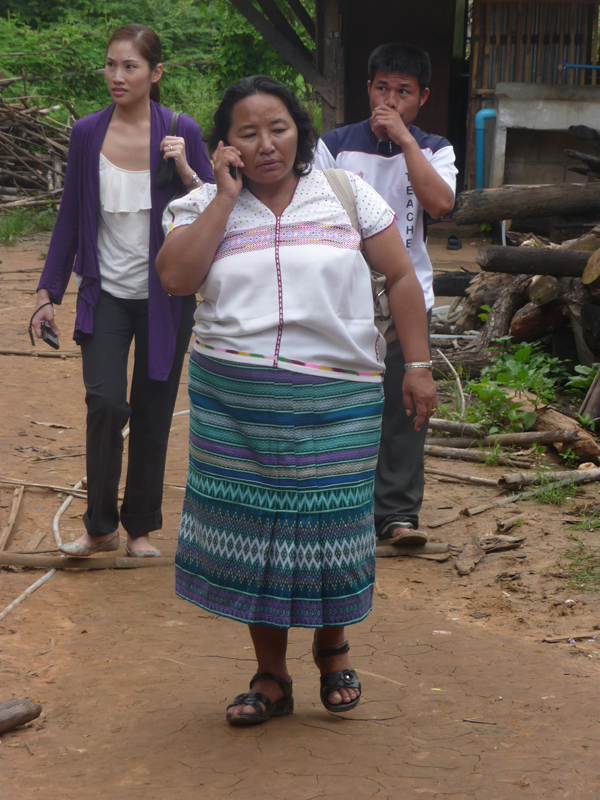
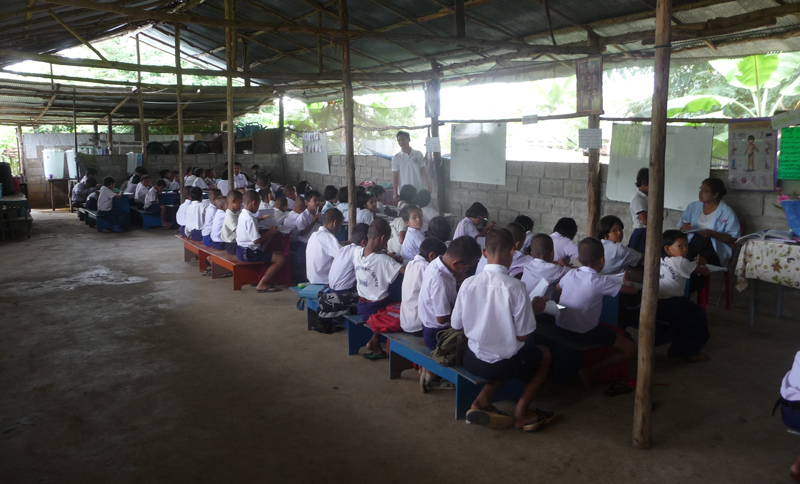
An estimated 50,000 children of refugees from Burma live in the Mae Sot area of Thailand,  80 percent with no access to schools. Among them are children from the Mon, Karen and Shan minority groups fleeing decades of political, economic and military oppression at home.

These migrant populations along the Burmese border are largely forgotten, subject to harassment and have little access to support or education.

Estimates are that with a near absence of economic, educational, health and job options at home, about 2 million Burmese have migrated to Thailand since 1988.

Of these, 150,000 are living in refugee camps, 500,000 are legal migrants and the rest live illegally in Thailand.

Although the camps and borders are officially closed, an estimated 1,000 people cross into Thailand daily and this was evident on a recent visit to Mae Sot, with fighting raging just across the border.

Life for migrant Burmese in Thailand, however, is not much better than at home.  In a report released last year, Human Rights Watch described “an atmosphere circumscribed by fear, violence, abuse, corruption and intimidation for illegal Burmese in Thailand.”

The illegal migrants are kept to just a few low-skill job opportunities.  Most work as day labourers with no rights, no protection. They are commonly exploited and abused by employers, police, immigration and others with little recourse, according to HRW.

Schooling options for their children are also limited. Places for them in local Thai schools  are almost non-existent, although there are some limited Burmese “education centres” as the Thai government prefers to call them.  

In the Mae Sot area, Ashoka fellow Naw Paw Ray has worked hard to get Burmese children into some sort of schooling over the past 11 years. Of the 50,000 locally, she estimates 12,500 attend the  60 education centres, as they are called by the Thai government, gathered under her Burmese Migrant Workers Educational Centre network.

BWMEC works to make sure the curriculum and facilities of the education centres under her umbrella are adequate for learning, providing training, funding, administrative support and school buildings or dormitories where necessary.

A migrant herself, Paw Ray’s story is fairly typical of the migrant Burmese community. She left Burma  in 1986 when her village was destroyed by soldiers and entered a refugee camp in Mae Sot when they were set up by the United Nations a year later.  

In Burma, Paw Ray was a teacher but in Mae Sot she worked in a gas station until she said she could no longer stand to see the discrimination. “I could teach and I wanted to teach. I wanted to do something to help my people,” she said, setting up a first school with just 25 Karen and Burmese students.

Chosen as an Ashoka fellow in 2007, Paw Ray said that in her work she hoped to address the vast educational gap between Thai children and the children of Burmese migrant workers.

Naw Paw’s schools hopefully give migrant children options – preparing them for a prospective return to Burma or integration into Thai society and culture – critical to establishing a pluralistic and tolerant Thai society. The idea is to pave the way for migrant schools, students, and teachers to gain public support and official accreditation in Thailand.

No other organisation in Thailand fields such an array of minority schools or is doing so much to build a long-term solution to the growing number of uneducated migrant children coming to or born in Thailand each year.

Yet like many good organizations, Paw Ray struggles to find adequate funding to support this forgotten community.

And the problem remains, children attending the Burmese elementary schools have only limited access to Thai secondary schools for reasons related to cost, discrimination and availability.  That limits future job opportunities and integration.

So Paw Ray’s challenge remains: what is the best way to provide education to a migrant population that may or may not return home ?

Recently we were in Northern Sulawesi visiting Willie Smits, an evangelist for sugar palm. I had seen his Ted talk and met him in Hong Kong on a previous visit and we wanted to see his work for ourselves.

We were keen to understand more about both sugar palm as a source of livelihoods for local populations and also his program of ecological restoration built around the trees, which are native to Sulawesi.

ADM Capital Foundation has been working with the Nantu conservation effort, also in Northern Sulawesi, and are looking at ways to help Nantu generate alternative local livelihoods. Clearly we can’t talk about forest conservation without working on the development/education piece for communities, as I have discussed in previous blogs.

Smits, a biologist/forester, has lived in Indonesia for three decades and is married to an Indonesian tribal princess who is also a local politician. Having worked previously for years for the ministry of forestry in Jakarta he has a good understanding of both Indonesia and its political/corruption challenges.

Over the past decade writing about, researching and working with sugar palm, Willie has built a unique store of data on everything about the tropical plant, as well as on deforestation, its causes and consequences.

He spends much of his time working through how to restore land for people and forest-dwelling animals alike, create livelihoods for local populations so they no longer must poach, log or otherwise log to support their families.

Understandably, Indonesia’s Forestry Ministry is focused not so much on conservation in Indonesia, but on how to support development that will sustain a rapidly growing population currently at around 230 million. This was made patently clear in a recent conversation with Jakarta MOF officials.

Understanding this, Willie Smits instead of talking about saving Orangutans from palm oil plantations, talks about community livelihoods, about Samboja Lestari, which is the restoration initiative discussed in his TED talk, about his sugar palm cooperative of 6,285 shareholders in Northern Sulawesi.

Although he now is not directly involved with Samboja, which is administered by the organization he founded but no longer leads, Borneo Orangutan Survival Foundation, Willie is still a board member of BOS. The principles around which Samboja was built stand regardless of its management: diversified secondary forest that includes sugar palm and at each layer provides income for communities as well as habitat for animals.

Secondary forest that produces income of course also takes the pressure off native forests.

To achieve this, Willie has developed a franchise process and system to sign up local holders of degraded land, provide the palms and training at a cost of approximately US$1000 per hectare.

The idea is that each cluster of about 150 farmers form a “Village Hub” or a cooperative that acts to build the social fabric, as a bank and to consolidate the product. The mini sugar processing plant, the core of the village hub, which is primarily solar driven, concentrates the raw sugar juice from about 20% to above 60% where it is nonreactive and easier to transport.

Each farmer has an account with the hub and this is credited with each container of juice brought in. They can then use the credit to buy goods and services in the village. This removes the use of actual money and the potential for corruption or theft.

The concentrate is delivered to a regional hub that processes the concentrate to various products, including raw sugar, rum, bio ethanol, among many others. Village Hubs are estimated to cost around 350,000 Euros.

Now to the numbers:

Willie claims to be able to plant 70 producing sugar palms per hectare in among other vegetation, with each tree producing 13 liters of sugar syrup, equivalent to 3 kilos of sugar per day. That’s roughly 36.5 tons of sugar or  19 tons of ethanol per hectare per year – according to Willie the equivalent of 82 barrels of oil per hectare per year.

Sugar palm, he says, requires little water, no chemical fertilizers or pesticides (they have their own built-in defenses), creates local jobs for tappers (trees must be tapped twice a day and this keep local people occupied and away from natural forest). They also enhance food security since sugar palms produce sago, sugar (better for you apparently than cane sugar) and fruit.

Sugar palm, Willie emphasizes, is not a crop but a forest and there are already an estimated 10 million existing sugar palms, many of these in Indonesia. Furthermore, there are tens of millions of hectares of grassland or wasteland that could be restored to include sugar palm that would provide local livelihoods, sequester carbon, while producing fuel and food. He is looking at where else in the world sugar palm might be used to generate income.

Some interesting concepts and hard to verify since most of the work around sugar palm has been done by Willie himself.

Certainly, we would be keen to be pointed in the direction of other numbers/thinking connected to community livelihoods and sugar palm.

The campaign against shark-fin soup is building in Hong Kong and perhaps this is a good moment to summarize some of the actions and challenges around educating consumers about this unsustainable dish.

Recently, Legislative Council member, Hon. Audrey Eu, requested the moribund Hong Kong government to clarify its position on serving shark-fin soup at official banquets and to release information about how often the dish was included at state functions.

She also asked the government whether or not it was educating the public about the ecological damage caused by excessive consumption of high-value shark fins, which are often hacked off the still-alive marine animals. The shark body is then discarded in a practice widely condemned for its wastage and banned in U.S. and other waters.

The predictable response from Secretary for the Environment, Edward Yau at a Legco meeting on January 12 was that because of budgetary constraints not much shark-fin soup was served at official functions but that detailed information on this was impossible to gather. “We do not think it is appropriate to lay down guidelines to regulate the kind of food to be consumed in official banquets and meals,” Yau said.

Further, Yau hid behind the traditional government line, which is that HK follows CITES, which allows the trade in all 468 shark species (Yau says there are 320), except the three listed in the CITES appendices, Great White, Basking and Whale Sharks. “At present the laws of Hong Kong regulate the trade in shark species in accordance with the CITES requirements,” he said.

CITES is the Convention on International Trade in Endangered species of Wild Fauna and Flora.

The Hong Kong government showed once again that officials are more concerned with keeping an industry or trade body happy, in this case the Marine Products Association, than in any action against ecological damage or move toward encouraging sustainable fisheries.

Echoing this sentiment, in a recent letter to the SCMP, Robert Jenkins, identified as president of Species Management Specialists and apparently also a consultant to the Hong Kong Marine Products Association, wrote  “There are no valid reasons for Hong Kong’s Department of Agriculture, Fisheries and Conservation to condemn traditional Chinese cuisine simply to satisfy the views of persons and organisations ideologically opposed to human use of marine species for food.”

As justification for this he points again to CITES, which has 180 sovereign states as members and “for 25 years has been the premier international legal instrument identifying wild animals and plant species endangered by trade.” Even for the three listed shark species, Jenkins points out, CITES requires trade to be regulated, not stopped.

The reality is, however, that CITES is primarily a trade rather than a conservation body and as such is inherently political, motivated by issues beyond protection of species. CITES last year at its Doha meeting failed to include a severely threatened shark species, the Scalloped Hammerhead, among its appendices because member states with specific interests were  unable to reach agreement.  Even critically endangered Blue Fin Tuna is not listed by CITES.

Yet the International Union for the Conservation of Nature Red List of Threatened Species, has classified 143 shark species as either critically endangered, endangered, vulnerable, or near threatened with the risk of extinction. That amounts to 30 percent of all shark species and many of the shark fins that we find in Hong Kong markets actually belong to these.

Still, action against the consumption of shark-fin soup is growing in Asia. Illustrating the reputational risk to companies ignoring the issue, shark conservation organizations were again successful in pressuring a Hong Kong bank to withdraw a shark fin soup promotion. Last summer, following similar pressure, Citibank Hong Kong withdrew a shark-fin soup promotion and asked its employees to avoid the delicacy during work events.

Working together, several marine conservation groups recently launched a campaign against Dah Sing Bank  for announcing it would offer a shark-fin soup banquet for 12 to new borrowers.

After a few days of intense adverse publicity, the bank withdrew the offer. Hopefully, other financial institutions locally will also recognize the reputational risk around promoting or even serving shark fin soup at banquets.

Just to recap the importance, shark populations worldwide are facing massive decline. Scientists estimate that the fins of tens millions of sharks are traded globally.   This is devastating to sharks, which are slow-growing, long-lived, late to reach sexual maturity and produce few young.

In other words, the human appetite for shark fin and other shark products simply cannot be sustained.  The consumption of shark-fin soup is a major factor in declining shark populations, with potentially disastrous impacts on the entire marine ecosystem.

Although shark fins are widely regarded as tasteless, shark fin soup is considered a delicacy mainly because of the high price of the fins.  People eat or serve it mostly as a measure of status and a bowl can cost as much as US$400 a bowl.

Shark fins fetch a high price , while shark meat does not. Fins sold in Hong Kong range from about 90 euros to 300 euros per kilogram while shark meat in European markets fetch 1 euro to 7 euros per kilo, according to a Jan 22 letter to the editor in the South China Morning Post written by Claire Garner, director of the Hong Kong Shark Foundation (www.hksharkfoundation.org).

That means the  wasteful practice of shark finning – the cutting off a live shark’s fins and then throwing the body back to the sea – is highly lucrative.

WWF and other conservation organizations in Hong Kong such as Bloom Association, the Hong Kong Shark Foundation, Green Sense, Greenpeace, Shark Savers and others are working in their own way to draw attention to the need to protect sharks.

WWF has managed to persuade many corporations in Hong Kong such as HSBC, the Hong Kong and China Gas Company, Hang Seng Bank, Swire Properties, University of Hong Kong, Canon Hong Kong to adopt a no-shark-fin dining policy ( http://bit.ly/dtkHA1 ).  Hong Kong Observatory, and 180 primary and secondary schools also have made a similar pledge.

So what can the average person do to promote awareness around the damage shark finning causes our marine ecology? Beyond not consuming shark fin soup yourself, please do ask your companies and trading partners about their own policies.

It is urgent we act against waste and move consumption toward sustainable fisheries before it’s too late!

Greenpeace last week released the results of its third-annual green electronics survey – a look at how leading electronics manufacturers companies are doing. All but Apple and Phillips of the 21 companies contacted agreed to be ranked on three criteria; removing toxic substances, responsible take-back of their end-of-life products and energy efficiency.

The survey was motivated by the fact that throughout a product’s lifecycle – from material extraction to production, and from consumer use to disposal – electronic products have the potential to impact human health and the environment through the release of dangerous substances and energy consumption.

China is the world center for processing IT products and that country’s environment is paying the price. Printed Circuit Board and battery power production especially create heavy metal pollution.

Part of the problem is consumer demand for cheap products that don’t reflect the true cost of production – they don’t reflect the toll on the environment, on public and worker health.

Furthermore, IT companies continue to produce goods that have obsolescence built in, which means we consume endlessly looking for the newest or better product, boosting company revenues but at huge environmental and social cost, that, again, is not reflected in the price we pay.

The Greenpeace survey found a general improvement in green features compared to the previous two surveys in 2008 and 2007, including a significant decrease in use of hazardous chemicals and almost all products met or exceeded energy efficiency standards.

But lifecycle management was still the weakest point, with very little use of recycled plastic, varying take-back practices and few marketing efforts to prevent fast obsolescence of products.

Generally, also, Greenpeace found that electronics companies were becoming more transparent in the amount and type of product information provided to customers, often listing product’s chemical make-up and performance details.

Apple and Philips, however, once again refused to disclose any information to Greenpeace. Of course this reluctance to provide information is disappointing and not limited to probing by Greenpeace.

Beijing-based IPE, led by environmental activist Ma Jun, has also over the past year focused on the IT sector for its significant contribution to environmental degradation in China.

IPE has also contacted electronics companies about environmental violations and Apple is among those refusing to address questions about noxious emissions by factories producing its products.

Writing in a Guardian blog earlier last year, Ma Jun said 34 Chinese environmental organizations, including Friends of Nature, the Institute of Public and Environmental Affairs, and Green Beagle, questioned heavy metal pollution produced by companies in Apple’s supply chain in a letter sent to CEO Steve Jobs. Last week Ma Jun said that the only response from Apple has been a demand for proof that the polluting factories are producing electronics for Apple.

“The links between these companies and Apple are clearly established,” Ma Jun said last week. “We are working now to provide the company with hard evidence. Their unwillingness to release information about their production processes reminds me of Nike in the 1990s,”

By contrast, in an interview with Asia Water Project last year Ma Jun praised Hewlett Packard and Samsung for duck disclosure and movement toward greener products. Indeed, HP and Samsung were among the companies singled out in the Greenpeace survey for the producing some of the greenest products.

Why single out Apple, as IPE has done? Does a company with a solid reputation for being on top of its game, for producing innovative, quality and well-designed products, have a responsibility to manufacture without excessive environmental and social cost? Shouldn’t Apple be a leader also in its production processes and not a laggard?  Should we as consumers not demand more from the companies that sell us our products?

Fortunately, consumers ARE beginning to taking note. Companies that fail to adapt are poised to suffer huge reputational and revenue losses as a consequence.  A game-changing opportunity awaits those companies that choose to meet this challenge.


The world’s problems are too vast for philanthropy or governments alone to solve. The US$300 billion spent by U.S. philanthropists last year is just not enough to make a significant dent, while foreign aid represents less than 1 percent of global gross domestic product.

The reality is that only by harnessing the markets, large-scale private and institutional capital, will we even begin to meet the challenges posed by massive population growth, meet our many needs, address issues around water scarcity, our depleted resources as well as our polluted air and water.

Philanthropy can help spur innovation, it can be used as risk capital, to develop models for social benefit that can then be scaled. Governments can help take that innovation to scale but they can’t do it all. Only markets have the potential to bring about real change at the scale and speed we need that to happen.

In other words, we urgently need to take social investments out of the realm of just doing good and plant them firmly in business models in order to make our world fit for our children and grandchildren.

But how does that happen?

A new report released last week by J.P. Morgan and the Rockefeller Foundation in partnership with the Global Impact Investing Network  (GIIN) attempts to advance this discussion.

The report argues that impact investments are emerging as an alternative asset class, thus allowing the sector to be considered alongside any other as part of an investment portfolio.  Impact investments in this instance are defined as investments intended to create positive impact beyond, although not to the exclusion of, a financial return.

“With increasing numbers of investors rejecting the notion that they face a binary choice between investing for maximum risk-adjusted returns or donating for social purpose, the impact investment market is now at a significant turning point as it enters the mainstream, ” the report states.

It addresses questions such as what defines and differentiates impact investments, who is involved in the market and how they allocate capital. Also considered is what makes impact investment an emerging asset class, how much return investors are expecting and receiving,  how large is the potential opportunity for investment in this market and what does risk management and social monitoring involve?

The report analyzes five sectors that serve bottom-of-the-pyramid populations (the global population earning less than US$3,000 annually): Urban affordable housing, rural access to clean water, maternal health, primary education, and microfinance.

For just these segments of the impact investing universe, the report identifies a potential profit opportunity of between $183 and $667 billion as well as  investment opportunity between $400 billion and $1 trillion over the next decade.

Many impact investments will take the form of private equity or debt investments, the report says, while other instruments can include guarantees or deposits.  Publicly listed impact investments do exist, although as a small proportion of transactions.

B-Lab differentiates Impact Investing and Socially Responsible Investing, which has been around for some time, defining SRI (estimated at $2.7 trillion in 2007) as primarily negative screening, or investment in screened public equity funds that avoid so-called ‘sin stocks’ or seek to influence corporate behavior.

The core of the II asset class is that the model of the business (which could be a fund management firm or a company) into which the investment is made should be designed with the intent to achieve positive social or environmental impact, and this should be explicitly specified in company documents.

There are a handful of investment funds established to finance businesses that address social problems, especially in the developing world. Examples of funds working in these space include Acumen Fund, Root Capital, E+Co and IGNIA, among others.

A significant challenge identified in making impact investments is sourcing transactions. Many impact investment recipients are small companies and the majority of deal sizes analyzed from our investor survey are less than US$1m.

Particularly for investors based in different regions, the costs of due diligence on these investments can often challenge the economics of making such small investments.

Another, of course, would be setting the reporting standards needed to establish just what constitutes a social or environmental return on an investment. This is something on which GIIN and B-Lab are working hard.

It’s great to see a mainstream financial institution dipping into this discussion.

Last week,  I participated in a panel discussion at INSEAD, Singapore on impact investing and many of the points above were discussed at length. In particular, we spoke of the  challenges of II in a developing world context where this is urgently needed.


We recently spent time in Northern Sulawesi with Dr. Lynn Clayton at Nantu, which is the 62,000 hectare forest conservation area that the Oxford-edcuated biologist has worked effectively to protect from loggers and poachers over the past 20 years.

I was struck by the incredible size of the trees, the quantity of unusual birds, the general force of nature and indeed the privilege of spending time in such an untouched environment.
Separated from varied threats by a team of rangers who protect trees with trunks the width of houses, the endemic species, the babirusa and anoa among others, Nantu truly is like another world, a parallel and agreeable universe that is largely free of any human footprint.

Immediately evident is the interconnectedness of the forest – the trees, the plant life, the soil, the wildlife, the rain that cascades in waterfalls, that each facet of life adapts to meet its own needs, adjusting for self-preservation.

Also noticeably absent in this harmonious environment: evidence of humans. The footpaths along the perimeter and to a blind for watching babirusa at a  salt lick, the ranger stations, a community of gold miners deep within the forest, are the only apparent  confirmation that humans are part of this forested world.

The opposite side of the Nantu river is where the local  communities have established themselves – many of them brought in as a result of the government’s transmigration program, designed to move landless people from densely populated areas to less populous parts of the country. This tells another  different story: Kilometers of denuded land, the occasional lone tree, fields of wheat and a few other crops.

Still, when crops fail in these areas, inhabitants are forced to look for alternative income and that, most recently, has involved illegal gold mining inside Nantu or rattan collecting for local officials interested in seizing control of the protected area and its precious assets for their own benefit.

Clearly we need to preserve natural environments, which exist as lungs for the world, as repositories of biodiversity and as guardians of the watershed for local communities. But we also need to consider the need of communities to generate income to feed their families, to live decent, rural lives.

Although carbon REDD (reduced emissions from degradation and deforestation) in the future may become part of the puzzle, paying communities to help protect forests and the cost of conservation, that is not the only answer.

Generating livelihoods for communities  and building businesses that help pay for conservation must also be part of the solution. Dr. Clayton has been working with local families to plant cocoa and build livelihoods. So far about 100 families have received saplings over the years and many are now deriving income from their crops.

But even that is a balance. How to satisfy the local community and not attract others looking for similar rewards?

Are you building an interesting forestry conservation model that involves communities?


We recently hosted a forum with the Asia Foundation on Philanthropy and Climate change.  We hoped to encourage Asian funders to draw the lines between climate change (something that seems often hard for the individual to grasp) and the more tangible and immediate air pollution, forestry degradation, water scarcity etc.

We also hoped to then get them to think beyond the environment to a wider philanthropic portfolio and to consider the impact of climate change on livelihoods, health, education – even how funders in the arts might get involved to build awareness around the need to act.

Why? We feel that given the enormity of the problem, it’s often hard for the individual funder, the family office foundation, to see how they might act in any way that is impactful.

But what we found was remarkable energy in the room. Rather than despair, we felt that participants left informed and energized by our panelists and keynote speaker, Stephen Heintz of Rockefeller Brothers Fund, which has an excellent environment and health, southern China program, managed by Shenyu Belsky.

Dr. James Hansen, one of the world’s leading climate scientists and head of the New York’s NASA Goddard Institute for Space Studies, provided an overview of climate science – setting the scene for discussion. Dr. Hansen, an advocate for a carbon tax, spoke of our inertia in the face of an emergency, the possible extermination of species, receding glaciers, bleaching of coral reefs, acidification of the ocean, basically that we are a planet out of balance.

Heintz also spoke about urgency, describing climate change as a “planetary threat that knows no bounds.” He emphasized the particular threat in Asia – that of 16 countries facing extreme risk, five are in in this region and they are among the most impacted, low-lying Bangladesh for example.

In all, he said, global warming could cost southeast Asia 6-7 percent of GDP. Clearly, Asia is squarely at the intersection of climate and development and he emphasized the need for new ideas and new ways of thinking, something that accurately reflects current realities and anticipates new needs.

It is easy, Heintz pointed out, to be discouraged by the science, yet philanthropy, government, civil society and the private sector all have roles to play. In reality , it is imperative that we act because, inevitably, climate change will impact every other issue that we are working on.

Global grant-making, Heintz said, has increased dramatically over the past decade yet environmental issues are way behind, receiving only 5 percent of funding. Resources targeting climate change specifically, of course, are far less.

The philanthropy sector, Heintz said, can play a crucial catalytic role, take risk, experiment, support advocacy to change public policy and trigger larger systemic change. Important will be innovative public-private partnerships, helping to develop emerging models of low-carbon prosperity. His was an excellent speech.

Our three panelists, Runa Kahn of Bangladesh’s Friendship, Dorjee Sun of Carbon Conservation and John Liu, an environmental filmmaker and journalist based in Beijing, spoke of the practicalities of working effectively within this context – and they also were inspiring.

Runa spoke about making life possible for the 4 million people living  in impossible circumstances in Bangladesh’s northern chars, John Liu on a massive ecological restoration project in China and showed the results, Dorjee on carbon, community and market solutions for saving forests.

The entire session was expertly moderated by the Asia Business Council’s Mark Clifford who managed to draw together the discussion, keeping an often amorphous and difficult topic moving toward practical solutions and away from fear.

The forum was a private side event to the C40 Climate change conference early this month organized by the Civic Exchange and supported by the Hong Kong government and Jockey Club Charities Trust.

It would be great to hear about other experiences linking climate change with a wider philanthropic portfolio, about nudging funders into action in this arena.