Archives For December 31, 2010

Recently we were in Northern Sulawesi visiting Willie Smits, an evangelist for sugar palm. I had seen his Ted talk and met him in Hong Kong on a previous visit and we wanted to see his work for ourselves.

We were keen to understand more about both sugar palm as a source of livelihoods for local populations and also his program of ecological restoration built around the trees, which are native to Sulawesi.

ADM Capital Foundation has been working with the Nantu conservation effort, also in Northern Sulawesi, and are looking at ways to help Nantu generate alternative local livelihoods. Clearly we can’t talk about forest conservation without working on the development/education piece for communities, as I have discussed in previous blogs.

Smits, a biologist/forester, has lived in Indonesia for three decades and is married to an Indonesian tribal princess who is also a local politician. Having worked previously for years for the ministry of forestry in Jakarta he has a good understanding of both Indonesia and its political/corruption challenges.

Over the past decade writing about, researching and working with sugar palm, Willie has built a unique store of data on everything about the tropical plant, as well as on deforestation, its causes and consequences.

He spends much of his time working through how to restore land for people and forest-dwelling animals alike, create livelihoods for local populations so they no longer must poach, log or otherwise log to support their families.

Understandably, Indonesia’s Forestry Ministry is focused not so much on conservation in Indonesia, but on how to support development that will sustain a rapidly growing population currently at around 230 million. This was made patently clear in a recent conversation with Jakarta MOF officials.

Understanding this, Willie Smits instead of talking about saving Orangutans from palm oil plantations, talks about community livelihoods, about Samboja Lestari, which is the restoration initiative discussed in his TED talk, about his sugar palm cooperative of 6,285 shareholders in Northern Sulawesi.

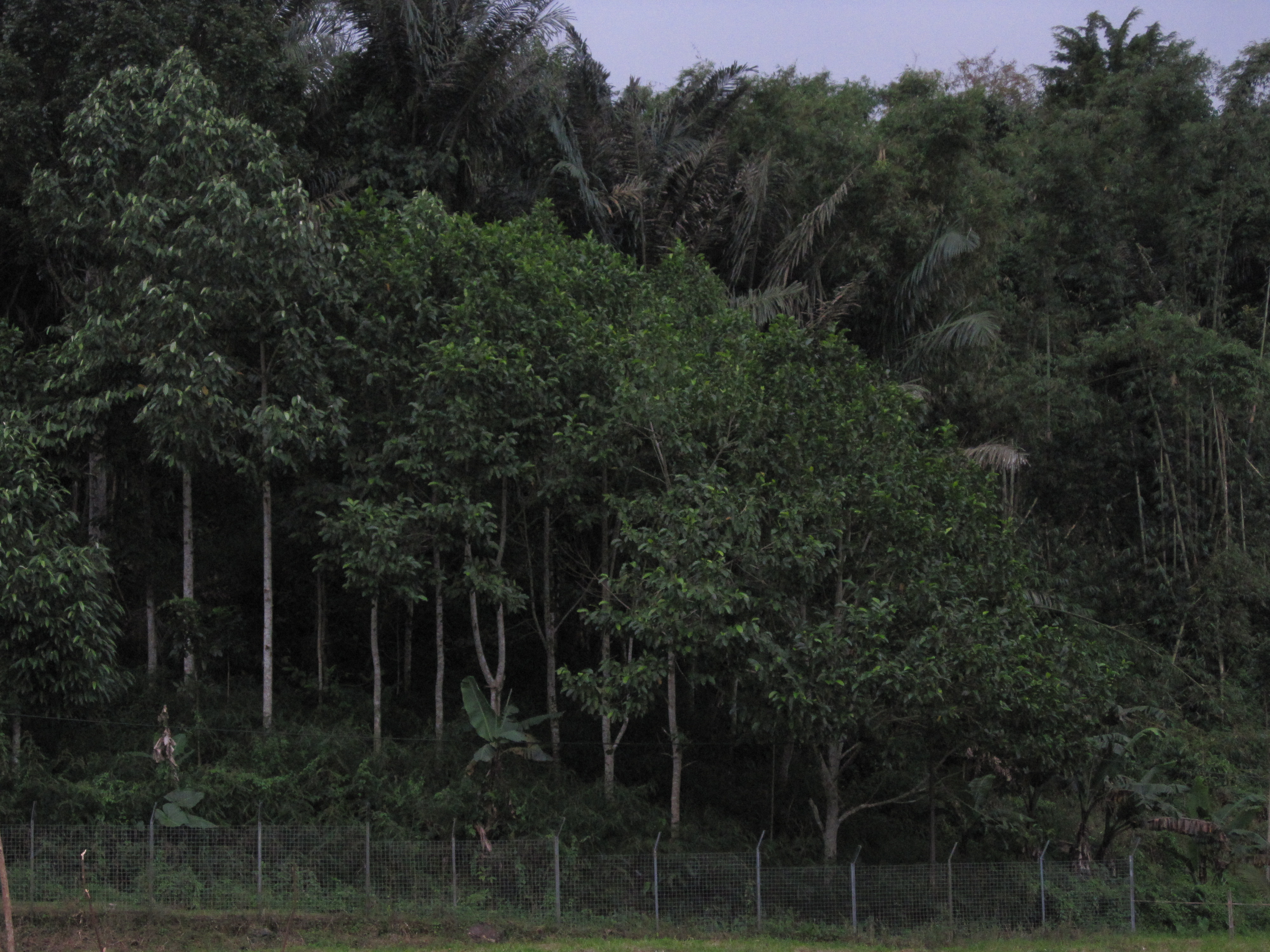
Although he now is not directly involved with Samboja, which is administered by the organization he founded but no longer leads, Borneo Orangutan Survival Foundation, Willie is still a board member of BOS. The principles around which Samboja was built stand regardless of its management: diversified secondary forest that includes sugar palm and at each layer provides income for communities as well as habitat for animals.

Secondary forest that produces income of course also takes the pressure off native forests.

To achieve this, Willie has developed a franchise process and system to sign up local holders of degraded land, provide the palms and training at a cost of approximately US$1000 per hectare.

The idea is that each cluster of about 150 farmers form a “Village Hub” or a cooperative that acts to build the social fabric, as a bank and to consolidate the product. The mini sugar processing plant, the core of the village hub, which is primarily solar driven, concentrates the raw sugar juice from about 20% to above 60% where it is nonreactive and easier to transport.

Each farmer has an account with the hub and this is credited with each container of juice brought in. They can then use the credit to buy goods and services in the village. This removes the use of actual money and the potential for corruption or theft.

The concentrate is delivered to a regional hub that processes the concentrate to various products, including raw sugar, rum, bio ethanol, among many others. Village Hubs are estimated to cost around 350,000 Euros.

Now to the numbers:

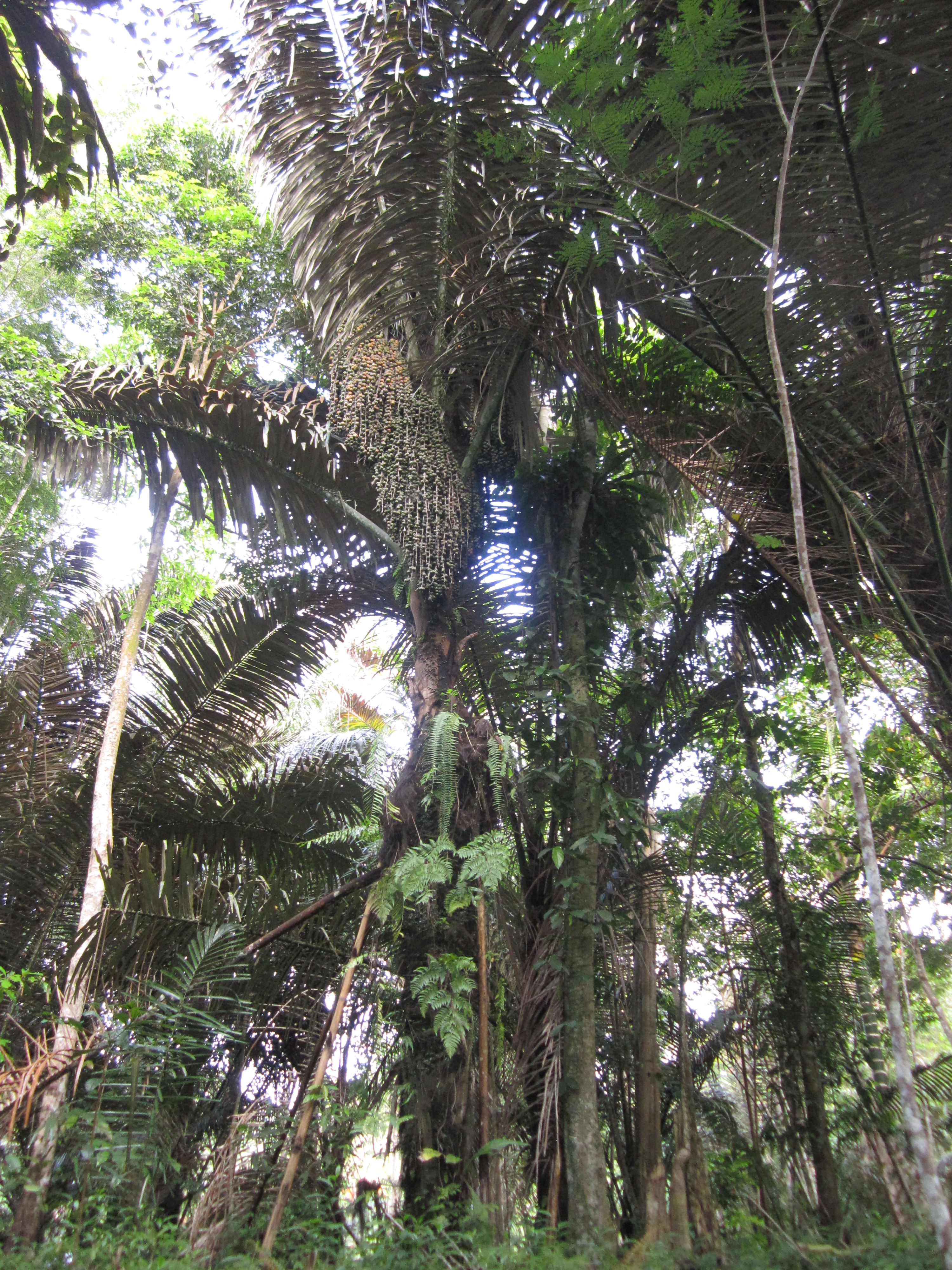
Willie claims to be able to plant 70 producing sugar palms per hectare in among other vegetation, with each tree producing 13 liters of sugar syrup, equivalent to 3 kilos of sugar per day. That’s roughly 36.5 tons of sugar or  19 tons of ethanol per hectare per year – according to Willie the equivalent of 82 barrels of oil per hectare per year.

Sugar palm, he says, requires little water, no chemical fertilizers or pesticides (they have their own built-in defenses), creates local jobs for tappers (trees must be tapped twice a day and this keep local people occupied and away from natural forest). They also enhance food security since sugar palms produce sago, sugar (better for you apparently than cane sugar) and fruit.

Sugar palm, Willie emphasizes, is not a crop but a forest and there are already an estimated 10 million existing sugar palms, many of these in Indonesia. Furthermore, there are tens of millions of hectares of grassland or wasteland that could be restored to include sugar palm that would provide local livelihoods, sequester carbon, while producing fuel and food. He is looking at where else in the world sugar palm might be used to generate income.

Some interesting concepts and hard to verify since most of the work around sugar palm has been done by Willie himself.

Certainly, we would be keen to be pointed in the direction of other numbers/thinking connected to community livelihoods and sugar palm.

The campaign against shark-fin soup is building in Hong Kong and perhaps this is a good moment to summarize some of the actions and challenges around educating consumers about this unsustainable dish.

Recently, Legislative Council member, Hon. Audrey Eu, requested the moribund Hong Kong government to clarify its position on serving shark-fin soup at official banquets and to release information about how often the dish was included at state functions.

She also asked the government whether or not it was educating the public about the ecological damage caused by excessive consumption of high-value shark fins, which are often hacked off the still-alive marine animals. The shark body is then discarded in a practice widely condemned for its wastage and banned in U.S. and other waters.

The predictable response from Secretary for the Environment, Edward Yau at a Legco meeting on January 12 was that because of budgetary constraints not much shark-fin soup was served at official functions but that detailed information on this was impossible to gather. “We do not think it is appropriate to lay down guidelines to regulate the kind of food to be consumed in official banquets and meals,” Yau said.

Further, Yau hid behind the traditional government line, which is that HK follows CITES, which allows the trade in all 468 shark species (Yau says there are 320), except the three listed in the CITES appendices, Great White, Basking and Whale Sharks. “At present the laws of Hong Kong regulate the trade in shark species in accordance with the CITES requirements,” he said.

CITES is the Convention on International Trade in Endangered species of Wild Fauna and Flora.

The Hong Kong government showed once again that officials are more concerned with keeping an industry or trade body happy, in this case the Marine Products Association, than in any action against ecological damage or move toward encouraging sustainable fisheries.

Echoing this sentiment, in a recent letter to the SCMP, Robert Jenkins, identified as president of Species Management Specialists and apparently also a consultant to the Hong Kong Marine Products Association, wrote  “There are no valid reasons for Hong Kong’s Department of Agriculture, Fisheries and Conservation to condemn traditional Chinese cuisine simply to satisfy the views of persons and organisations ideologically opposed to human use of marine species for food.”

As justification for this he points again to CITES, which has 180 sovereign states as members and “for 25 years has been the premier international legal instrument identifying wild animals and plant species endangered by trade.” Even for the three listed shark species, Jenkins points out, CITES requires trade to be regulated, not stopped.

The reality is, however, that CITES is primarily a trade rather than a conservation body and as such is inherently political, motivated by issues beyond protection of species. CITES last year at its Doha meeting failed to include a severely threatened shark species, the Scalloped Hammerhead, among its appendices because member states with specific interests were  unable to reach agreement.  Even critically endangered Blue Fin Tuna is not listed by CITES.

Yet the International Union for the Conservation of Nature Red List of Threatened Species, has classified 143 shark species as either critically endangered, endangered, vulnerable, or near threatened with the risk of extinction. That amounts to 30 percent of all shark species and many of the shark fins that we find in Hong Kong markets actually belong to these.

Still, action against the consumption of shark-fin soup is growing in Asia. Illustrating the reputational risk to companies ignoring the issue, shark conservation organizations were again successful in pressuring a Hong Kong bank to withdraw a shark fin soup promotion. Last summer, following similar pressure, Citibank Hong Kong withdrew a shark-fin soup promotion and asked its employees to avoid the delicacy during work events.

Working together, several marine conservation groups recently launched a campaign against Dah Sing Bank  for announcing it would offer a shark-fin soup banquet for 12 to new borrowers.

After a few days of intense adverse publicity, the bank withdrew the offer. Hopefully, other financial institutions locally will also recognize the reputational risk around promoting or even serving shark fin soup at banquets.

Just to recap the importance, shark populations worldwide are facing massive decline. Scientists estimate that the fins of tens millions of sharks are traded globally.   This is devastating to sharks, which are slow-growing, long-lived, late to reach sexual maturity and produce few young.

In other words, the human appetite for shark fin and other shark products simply cannot be sustained.  The consumption of shark-fin soup is a major factor in declining shark populations, with potentially disastrous impacts on the entire marine ecosystem.

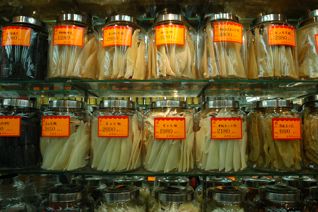
Although shark fins are widely regarded as tasteless, shark fin soup is considered a delicacy mainly because of the high price of the fins.  People eat or serve it mostly as a measure of status and a bowl can cost as much as US$400 a bowl.

Shark fins fetch a high price , while shark meat does not. Fins sold in Hong Kong range from about 90 euros to 300 euros per kilogram while shark meat in European markets fetch 1 euro to 7 euros per kilo, according to a Jan 22 letter to the editor in the South China Morning Post written by Claire Garner, director of the Hong Kong Shark Foundation (www.hksharkfoundation.org).

That means the  wasteful practice of shark finning – the cutting off a live shark’s fins and then throwing the body back to the sea – is highly lucrative.

WWF and other conservation organizations in Hong Kong such as Bloom Association, the Hong Kong Shark Foundation, Green Sense, Greenpeace, Shark Savers and others are working in their own way to draw attention to the need to protect sharks.

WWF has managed to persuade many corporations in Hong Kong such as HSBC, the Hong Kong and China Gas Company, Hang Seng Bank, Swire Properties, University of Hong Kong, Canon Hong Kong to adopt a no-shark-fin dining policy ( http://bit.ly/dtkHA1 ).  Hong Kong Observatory, and 180 primary and secondary schools also have made a similar pledge.

So what can the average person do to promote awareness around the damage shark finning causes our marine ecology? Beyond not consuming shark fin soup yourself, please do ask your companies and trading partners about their own policies.

It is urgent we act against waste and move consumption toward sustainable fisheries before it’s too late!

Greenpeace last week released the results of its third-annual green electronics survey – a look at how leading electronics manufacturers companies are doing. All but Apple and Phillips of the 21 companies contacted agreed to be ranked on three criteria; removing toxic substances, responsible take-back of their end-of-life products and energy efficiency.

The survey was motivated by the fact that throughout a product’s lifecycle – from material extraction to production, and from consumer use to disposal – electronic products have the potential to impact human health and the environment through the release of dangerous substances and energy consumption.

China is the world center for processing IT products and that country’s environment is paying the price. Printed Circuit Board and battery power production especially create heavy metal pollution.

Part of the problem is consumer demand for cheap products that don’t reflect the true cost of production – they don’t reflect the toll on the environment, on public and worker health.

Furthermore, IT companies continue to produce goods that have obsolescence built in, which means we consume endlessly looking for the newest or better product, boosting company revenues but at huge environmental and social cost, that, again, is not reflected in the price we pay.

The Greenpeace survey found a general improvement in green features compared to the previous two surveys in 2008 and 2007, including a significant decrease in use of hazardous chemicals and almost all products met or exceeded energy efficiency standards.

But lifecycle management was still the weakest point, with very little use of recycled plastic, varying take-back practices and few marketing efforts to prevent fast obsolescence of products.

Generally, also, Greenpeace found that electronics companies were becoming more transparent in the amount and type of product information provided to customers, often listing product’s chemical make-up and performance details.

Apple and Philips, however, once again refused to disclose any information to Greenpeace. Of course this reluctance to provide information is disappointing and not limited to probing by Greenpeace.

Beijing-based IPE, led by environmental activist Ma Jun, has also over the past year focused on the IT sector for its significant contribution to environmental degradation in China.

IPE has also contacted electronics companies about environmental violations and Apple is among those refusing to address questions about noxious emissions by factories producing its products.

Writing in a Guardian blog earlier last year, Ma Jun said 34 Chinese environmental organizations, including Friends of Nature, the Institute of Public and Environmental Affairs, and Green Beagle, questioned heavy metal pollution produced by companies in Apple’s supply chain in a letter sent to CEO Steve Jobs. Last week Ma Jun said that the only response from Apple has been a demand for proof that the polluting factories are producing electronics for Apple.

“The links between these companies and Apple are clearly established,” Ma Jun said last week. “We are working now to provide the company with hard evidence. Their unwillingness to release information about their production processes reminds me of Nike in the 1990s,”

By contrast, in an interview with Asia Water Project last year Ma Jun praised Hewlett Packard and Samsung for duck disclosure and movement toward greener products. Indeed, HP and Samsung were among the companies singled out in the Greenpeace survey for the producing some of the greenest products.

Why single out Apple, as IPE has done? Does a company with a solid reputation for being on top of its game, for producing innovative, quality and well-designed products, have a responsibility to manufacture without excessive environmental and social cost? Shouldn’t Apple be a leader also in its production processes and not a laggard?  Should we as consumers not demand more from the companies that sell us our products?

Fortunately, consumers ARE beginning to taking note. Companies that fail to adapt are poised to suffer huge reputational and revenue losses as a consequence.  A game-changing opportunity awaits those companies that choose to meet this challenge.