Archives For October 31, 2010


We recently spent time in Northern Sulawesi with Dr. Lynn Clayton at Nantu, which is the 62,000 hectare forest conservation area that the Oxford-edcuated biologist has worked effectively to protect from loggers and poachers over the past 20 years.

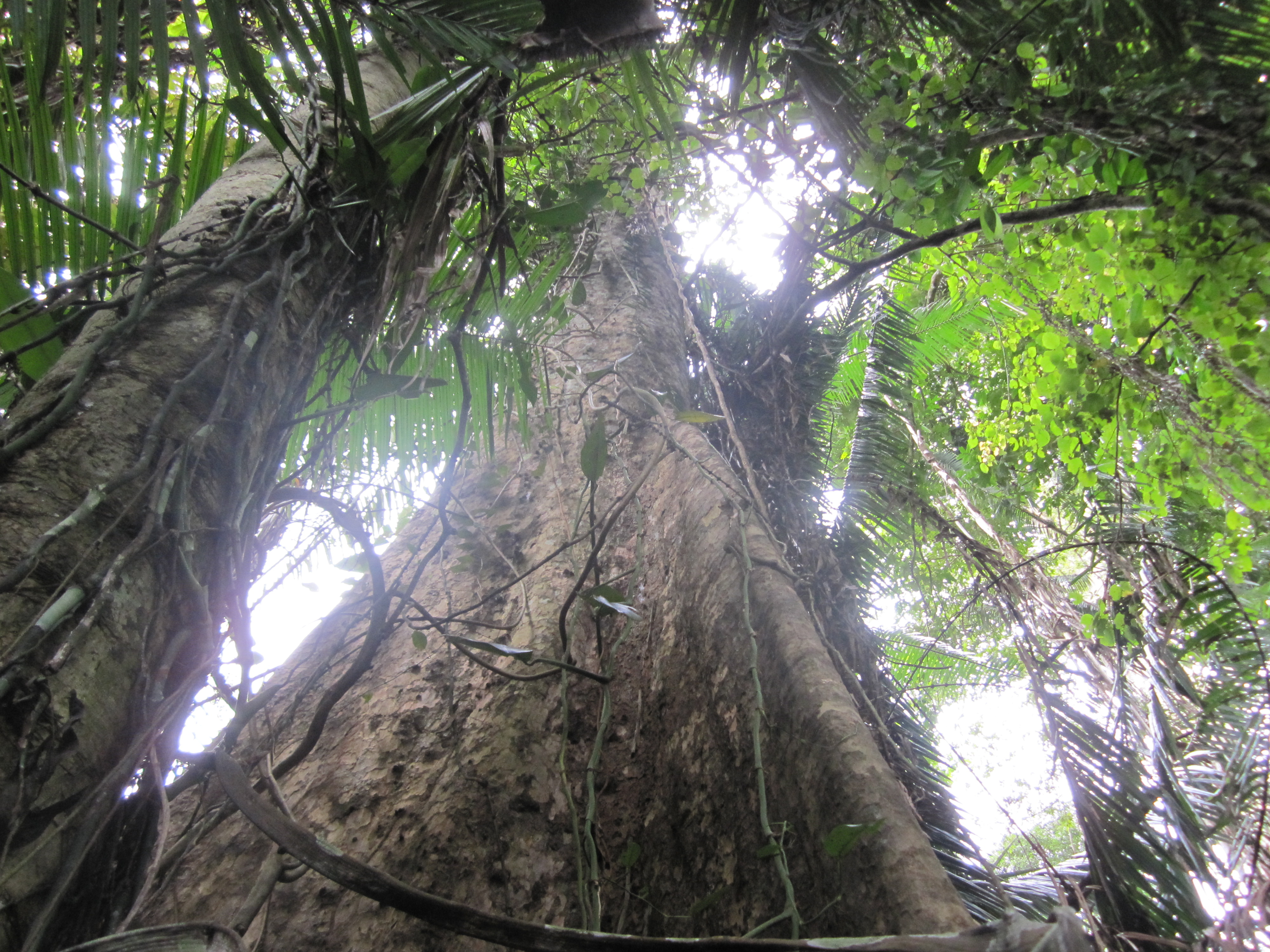
I was struck by the incredible size of the trees, the quantity of unusual birds, the general force of nature and indeed the privilege of spending time in such an untouched environment.

Separated from varied threats by a team of rangers who protect trees with trunks the width of houses, the endemic species, the babirusa and anoa among others, Nantu truly is like another world, a parallel and agreeable universe that is largely free of any human footprint.

Immediately evident is the interconnectedness of the forest – the trees, the plant life, the soil, the wildlife, the rain that cascades in waterfalls, that each facet of life adapts to meet its own needs, adjusting for self-preservation.

Also noticeably absent in this harmonious environment: evidence of humans. The footpaths along the perimeter and to a blind for watching babirusa at a  salt lick, the ranger stations, a community of gold miners deep within the forest, are the only apparent  confirmation that humans are part of this forested world.

The opposite side of the Nantu river is where the local  communities have established themselves – many of them brought in as a result of the government’s transmigration program, designed to move landless people from densely populated areas to less populous parts of the country. This tells another  different story: Kilometers of denuded land, the occasional lone tree, fields of wheat and a few other crops.

Still, when crops fail in these areas, inhabitants are forced to look for alternative income and that, most recently, has involved illegal gold mining inside Nantu or rattan collecting for local officials interested in seizing control of the protected area and its precious assets for their own benefit.

Clearly we need to preserve natural environments, which exist as lungs for the world, as repositories of biodiversity and as guardians of the watershed for local communities. But we also need to consider the need of communities to generate income to feed their families, to live decent, rural lives.

Although carbon REDD (reduced emissions from degradation and deforestation) in the future may become part of the puzzle, paying communities to help protect forests and the cost of conservation, that is not the only answer.

Generating livelihoods for communities  and building businesses that help pay for conservation must also be part of the solution. Dr. Clayton has been working with local families to plant cocoa and build livelihoods. So far about 100 families have received saplings over the years and many are now deriving income from their crops.

But even that is a balance. How to satisfy the local community and not attract others looking for similar rewards?

Are you building an interesting forestry conservation model that involves communities?


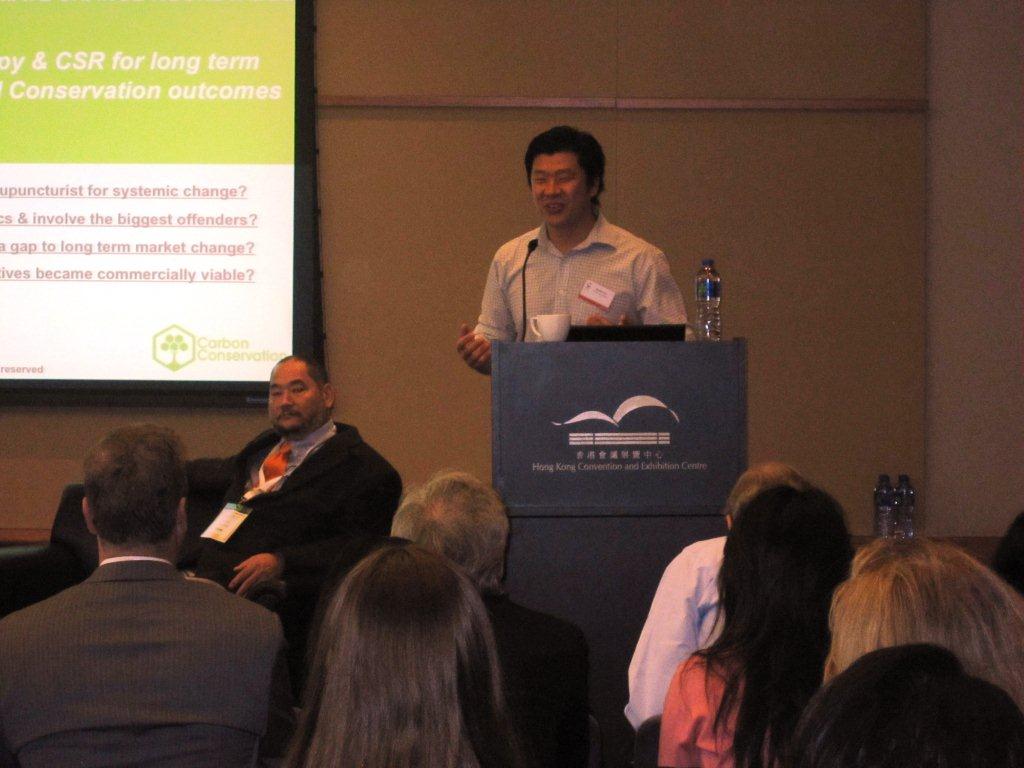
We recently hosted a forum with the Asia Foundation on Philanthropy and Climate change.  We hoped to encourage Asian funders to draw the lines between climate change (something that seems often hard for the individual to grasp) and the more tangible and immediate air pollution, forestry degradation, water scarcity etc.

We also hoped to then get them to think beyond the environment to a wider philanthropic portfolio and to consider the impact of climate change on livelihoods, health, education – even how funders in the arts might get involved to build awareness around the need to act.

Why? We feel that given the enormity of the problem, it’s often hard for the individual funder, the family office foundation, to see how they might act in any way that is impactful.

But what we found was remarkable energy in the room. Rather than despair, we felt that participants left informed and energized by our panelists and keynote speaker, Stephen Heintz of Rockefeller Brothers Fund, which has an excellent environment and health, southern China program, managed by Shenyu Belsky.

Dr. James Hansen, one of the world’s leading climate scientists and head of the New York’s NASA Goddard Institute for Space Studies, provided an overview of climate science – setting the scene for discussion. Dr. Hansen, an advocate for a carbon tax, spoke of our inertia in the face of an emergency, the possible extermination of species, receding glaciers, bleaching of coral reefs, acidification of the ocean, basically that we are a planet out of balance.

Heintz also spoke about urgency, describing climate change as a “planetary threat that knows no bounds.” He emphasized the particular threat in Asia – that of 16 countries facing extreme risk, five are in in this region and they are among the most impacted, low-lying Bangladesh for example.

In all, he said, global warming could cost southeast Asia 6-7 percent of GDP. Clearly, Asia is squarely at the intersection of climate and development and he emphasized the need for new ideas and new ways of thinking, something that accurately reflects current realities and anticipates new needs.

It is easy, Heintz pointed out, to be discouraged by the science, yet philanthropy, government, civil society and the private sector all have roles to play. In reality , it is imperative that we act because, inevitably, climate change will impact every other issue that we are working on.

Global grant-making, Heintz said, has increased dramatically over the past decade yet environmental issues are way behind, receiving only 5 percent of funding. Resources targeting climate change specifically, of course, are far less.

The philanthropy sector, Heintz said, can play a crucial catalytic role, take risk, experiment, support advocacy to change public policy and trigger larger systemic change. Important will be innovative public-private partnerships, helping to develop emerging models of low-carbon prosperity. His was an excellent speech.

Our three panelists, Runa Kahn of Bangladesh’s Friendship, Dorjee Sun of Carbon Conservation and John Liu, an environmental filmmaker and journalist based in Beijing, spoke of the practicalities of working effectively within this context – and they also were inspiring.

Runa spoke about making life possible for the 4 million people living  in impossible circumstances in Bangladesh’s northern chars, John Liu on a massive ecological restoration project in China and showed the results, Dorjee on carbon, community and market solutions for saving forests.

The entire session was expertly moderated by the Asia Business Council’s Mark Clifford who managed to draw together the discussion, keeping an often amorphous and difficult topic moving toward practical solutions and away from fear.

The forum was a private side event to the C40 Climate change conference early this month organized by the Civic Exchange and supported by the Hong Kong government and Jockey Club Charities Trust.

It would be great to hear about other experiences linking climate change with a wider philanthropic portfolio, about nudging funders into action in this arena.